What if the cure for cancer already existed… but never reached the people who needed it most? It’s a question that has echoed through documentaries, forums, and whispered conversations for decades. Behind it lies a powerful idea: that somewhere, hidden in a lab or buried in corporate archives, a breakthrough treatment was discovered—and then silenced. But is this a hidden truth… or a story built from fear, mistrust, and misunderstanding?
If you’ve explored other health-related theories like Anti-Vaccine Conspiracies or questioned modern science through posts like 5G Health Concerns, you’ve likely seen a pattern: when the stakes are high, belief spreads fast.
The Claim
The cancer cure cover-up theory suggests that pharmaceutical companies, governments, or powerful organizations have already discovered highly effective—or even complete—cures for cancer. According to this belief, these cures are deliberately hidden to protect profits from long-term treatments like chemotherapy, radiation, and prescription drugs.
The logic seems simple on the surface. Cancer is a massive industry worth billions of dollars every year. If a single cure could eliminate the need for ongoing treatments, it could disrupt entire markets overnight. For some, that makes the idea of suppression not only possible—but likely.
This theory often includes claims about alternative treatments being “silenced,” doctors being discredited, or researchers mysteriously disappearing after breakthroughs. Social media has amplified these stories, turning isolated claims into global narratives.
Why People Believe It
At its core, this belief is driven by something deeply human: fear mixed with hope.
Cancer affects millions of families worldwide. Almost everyone knows someone who has faced it. When treatments are long, painful, expensive, and not always successful, people naturally start asking questions.
Why is it so hard to cure?
Why do treatments vary so much?
Why does progress feel slow?
These questions don’t come from ignorance—they come from experience.
There’s also a growing distrust of large institutions. Past events, like the Tuskegee Syphilis Study, proved that real medical cover-ups have happened. When trust is broken once, it becomes much easier to believe it could happen again.
Then there’s the internet effect. A single viral post claiming “natural cures are being suppressed” can reach millions within hours. These claims often feel convincing because they’re emotional, simple, and offer hope where traditional medicine sometimes cannot.
The Complexity of Cancer
Here’s where the reality begins to shift.
Cancer is not a single disease. It is actually a group of over 100 different diseases, each with its own causes, behaviors, and treatments. Lung cancer is different from breast cancer. Leukemia is different from skin cancer. Even within one type, patients can respond very differently.
This makes the idea of “one cure for all cancer” extremely unlikely.
Scientists don’t work on cancer as one problem—they work on thousands of different problems at the same time. Each breakthrough is usually specific, targeting one type, one mutation, or one pathway.
That’s why progress feels slow. It’s not because nothing is happening—it’s because the challenge itself is incredibly complex.
What Science Actually Shows
Despite the belief that cures are being hidden, the reality is that cancer treatment has improved dramatically over time.
Survival rates for many cancers have increased significantly over the past few decades. Treatments like immunotherapy, targeted therapy, and precision medicine are changing how doctors approach the disease.
In some cases, cancers that were once considered deadly are now highly treatable—or even curable when caught early.
If there were a universal cure being hidden, it would require silence across thousands of independent researchers, doctors, universities, and countries. The global medical community is vast, competitive, and decentralized. Discoveries are published, tested, challenged, and replicated.
Keeping something that big hidden would be extremely difficult.
The Profit Argument
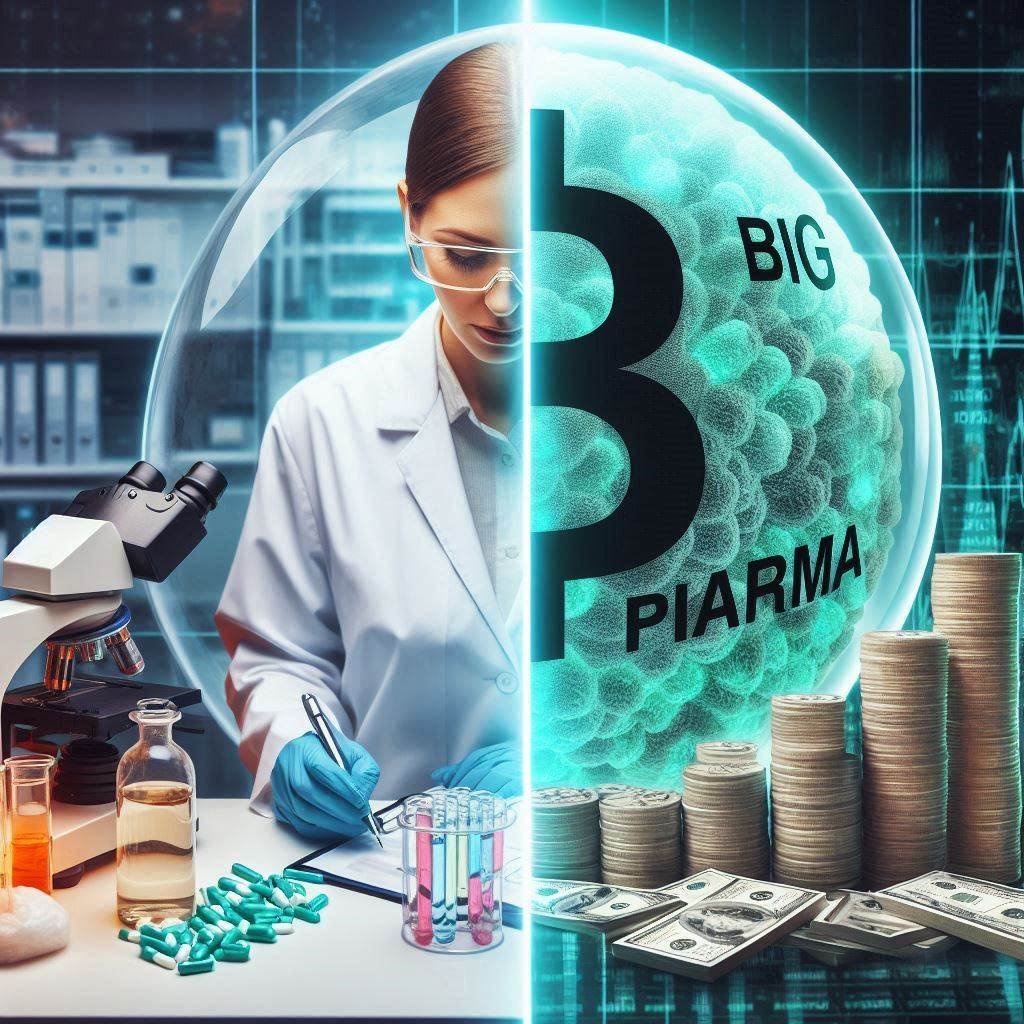
The idea that pharmaceutical companies would hide a cure to protect profits is one of the strongest parts of this theory.
But it also has a major flaw.
A company that discovered a true cure for cancer wouldn’t lose money—it would likely become one of the most powerful and profitable companies in history. The demand would be global, immediate, and massive.
Instead of suppressing it, there would be enormous financial incentive to release it.
Competition also plays a role. Thousands of companies and research institutions are working on cancer treatments. If one group tried to hide a cure, another could discover and release it independently.
The system isn’t perfect—but it’s not centralized enough for a single hidden cure to stay buried.
Alternative Treatments and Misinformation
Part of this theory is fueled by stories of “natural cures” being ignored or suppressed.
While it’s true that some natural substances have medical value, most alternative cancer treatments lack strong scientific evidence. Some are tested and found ineffective. Others are never properly studied at all.
This doesn’t mean they’re being hidden—it often means they simply don’t work as claimed.
The danger is that people may choose unproven treatments over medical care that could actually help them. This is where misinformation becomes harmful, turning hope into risk.
The Role of Media and Pop Culture
Movies, documentaries, and online content have played a huge role in spreading the idea of hidden cures.
Stories about secret labs, suppressed research, and powerful corporations make for compelling narratives. They fit into a larger pattern seen in other theories, like Predictive Programming in Movies, where entertainment blurs the line between fiction and possibility.
But storytelling often prioritizes drama over accuracy. A hidden cure is far more exciting than the slow, complex reality of scientific research.
Reality Check
So… is there a hidden cure for cancer?
There is no credible evidence that a universal cure exists and is being deliberately suppressed.
What does exist is something both less dramatic and more important: continuous progress. Researchers around the world are making advances every year. New treatments are being developed, tested, and improved.
The idea of a cover-up is powerful because it offers a simple answer to a complicated problem. But the truth is more nuanced.
Cancer isn’t one enemy—it’s many. And the fight against it isn’t being hidden—it’s happening in hospitals, labs, and research centers every single day.
That doesn’t mean the system is perfect. There are real issues with healthcare costs, access to treatment, and ethical concerns. But those are different from the idea of a hidden cure.
Understanding that difference is what separates belief from evidence.
🔎 If this story made you question what’s real and what’s not, explore these next:
- Anti-Vaccine Conspiracies: How Fear and Misinformation Spread
- The Tuskegee Syphilis Study: A Real Medical Cover-Up
- Food and Water Myths: What’s Actually True?
📂 Explore more in this category:
Health and Medicine Conspiracies