
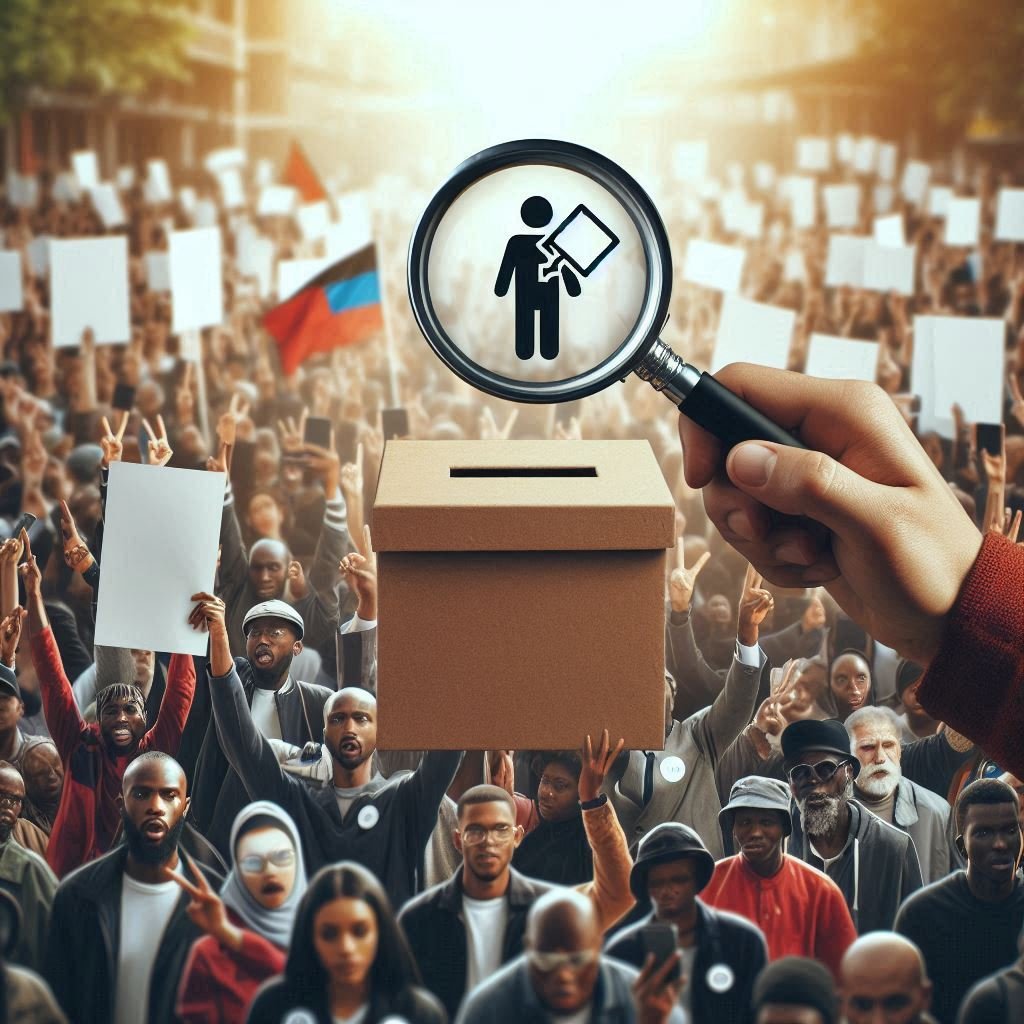
Few political accusations land harder than this one: an election was not merely messy or disputed, but stolen through fraud hidden inside the system itself. That claim has appeared after major contests for generations. Sometimes it starts with a real irregularity, a delayed count, or a confusing local report. Then the story grows. The central question is not whether people make election allegations — they do, constantly — but whether the evidence ever shows a coordinated scheme big enough to change the result.
Setup
Election fraud theories sit at the uncomfortable intersection of two truths. First, election systems are run by human beings, and human systems can make mistakes. Second, mistakes, delays, and even isolated crimes are not the same thing as a nationwide conspiracy. That gap matters.
In the modern media environment, a close race can produce a perfect storm: partisan distrust, incomplete returns, viral clips stripped of context, and official procedures that look suspicious to people seeing them for the first time. A ballot box moved from one room to another can become “proof” of tampering. A reporting correction can be recast as “evidence” that totals were manipulated. A county processing backlog can suddenly look like a covert operation.
🔎 Related Investigation:
That is why this topic needs an evidence-first approach. Instead of starting with a conclusion and working backward, the better method is simpler: identify the claim, ask what would have to be true for it to work, and then check whether audits, court filings, investigators, or election administrators actually found that evidence.
What people claim
Election fraud theories usually fall into a few familiar categories. One version says large numbers of ineligible people voted: non-citizens, deceased voters, or duplicate registrations supposedly turned into real ballots. Another claims voting machines or tabulation software were manipulated behind the scenes. A third argues that fake ballots were inserted, legitimate ballots were discarded, or vote spikes proved the count was being engineered in real time.
These claims often feel persuasive because they are built from recognizable fragments. Voter rolls really can contain outdated records. Election technology really has been criticized by security researchers. Counts really do change throughout the night as different types of ballots are processed. But conspiracy thinking tends to flatten those distinctions. It takes a weakness, an imperfection, or a confusing administrative reality and turns it into a complete secret plot.
That pattern is not unique to elections. It resembles the logic behind stories about shadow governments or a centralized New World Order: visible complexity is treated as evidence of hidden coordination, even when the public record shows competing institutions, messy procedures, and ordinary bureaucratic failure instead.
Why it spread
Election fraud stories spread because they meet a deep emotional need. If an outcome feels shocking, unfair, or politically unacceptable, fraud can seem like a cleaner explanation than persuasion, turnout differences, strategic mistakes, or demographic change. A conspiracy is psychologically easier than admitting that millions of other people voted differently than expected.
Digital platforms make that instinct stronger. A grainy video, a spreadsheet screenshot, or a courtroom rumor can travel faster than a full explanation from election officials. By the time a claim is checked, the allegation has already done its work. It has created suspicion.
There is also a trust problem. Governments, parties, media outlets, and intelligence agencies have all damaged public confidence at different moments in history. Proven information campaigns — including the kind associated with stories like Operation Mockingbird — make some audiences more willing to believe that official narratives are always hiding something. That suspicion is understandable. But suspicion alone is not evidence. A public record of institutional dishonesty does not automatically validate every new allegation placed on top of it.
What the evidence shows
When major election fraud allegations are examined closely, the same pattern appears again and again: investigators may find isolated errors, occasional unlawful acts, sloppy local administration, or weak procedures that deserve reform — but they do not find the kind of coordinated, outcome-changing fraud claimed in the broadest narratives.
That distinction is essential. There have been real election-related crimes in American history: absentee ballot schemes in local races, fraudulent registrations, ballot harvesting violations, forged signatures, and corruption cases involving individual officials or campaigns. Those incidents matter. They are prosecuted precisely because election systems are not magical or immune to abuse.
But that is not what the biggest conspiracy claims usually allege. The large-scale stories typically require thousands of actors across counties, states, vendors, observers, and courts to coordinate silently while leaving little or no verifiable trace. Once framed that way, the burden of proof becomes much higher — and the documented evidence usually falls short.
🔎 Related Investigation:
Audits, recounts, bipartisan certifications, and court proceedings are especially important here because they create paper trails. A machine claim can be checked against hand counts. A ballot claim can be tested through chain-of-custody records, signatures, envelopes, and observer testimony. A dramatic statistical claim can be compared with the ordinary realities of when different jurisdictions report different kinds of ballots.
In many high-profile cases, the strongest public allegations have not matched what was actually submitted under legal scrutiny. Viral claims often sound certain online, then become narrower, vaguer, or unsupported when evidence is demanded in court or by investigators. That does not mean every official process is perfect. It means extraordinary claims still need extraordinary proof.
Where confusion came from
Much of the confusion comes from how elections are administered. Different states count ballots differently. Some process mail ballots before Election Day; others cannot begin until polls close. Some publish batches at regular intervals. Others update slowly, then release large totals at once. To someone unfamiliar with the rules, a late shift in reported numbers can look sinister when it is actually procedural.
Another source of confusion is the difference between weak safeguards and proven exploitation. Security researchers have long argued that election systems should rely more heavily on auditable paper trails, stronger post-election reviews, and clearer public communication. Those are serious reform arguments. But a vulnerability is not the same thing as a demonstrated hack, and a theoretical possibility is not the same thing as verified fraud.
Finally, people often confuse litigation, media controversy, and evidence. A lawsuit does not prove the underlying claim. A politician repeating an allegation does not make it documented. A trending clip does not reveal the full context. In practice, many election fraud theories gain force by piling unresolved questions on top of one another until uncertainty itself is treated as proof.
Reality Check
The fairest conclusion is neither blind trust nor reflexive cynicism. Elections deserve scrutiny, and genuine irregularities should be investigated aggressively. But the broad theory that major modern elections are routinely decided by hidden, coordinated fraud has repeatedly outrun the evidence used to support it.
What survives inspection is more complicated and less cinematic: real administrative flaws, occasional criminal cases, persistent misinformation, and a public that often encounters election procedures only when controversy erupts. That combination is enough to generate endless suspicion without proving a sweeping secret operation.
So the reality check is simple. Separate claims from verified findings. Treat anomalies as starting points, not conclusions. And when a theory requires a vast covert machine, ask the most important question of all: where is the evidence that holds up after audits, records reviews, and legal scrutiny?
🔎 If this story made you think, here are more conspiracy investigations worth exploring next: