
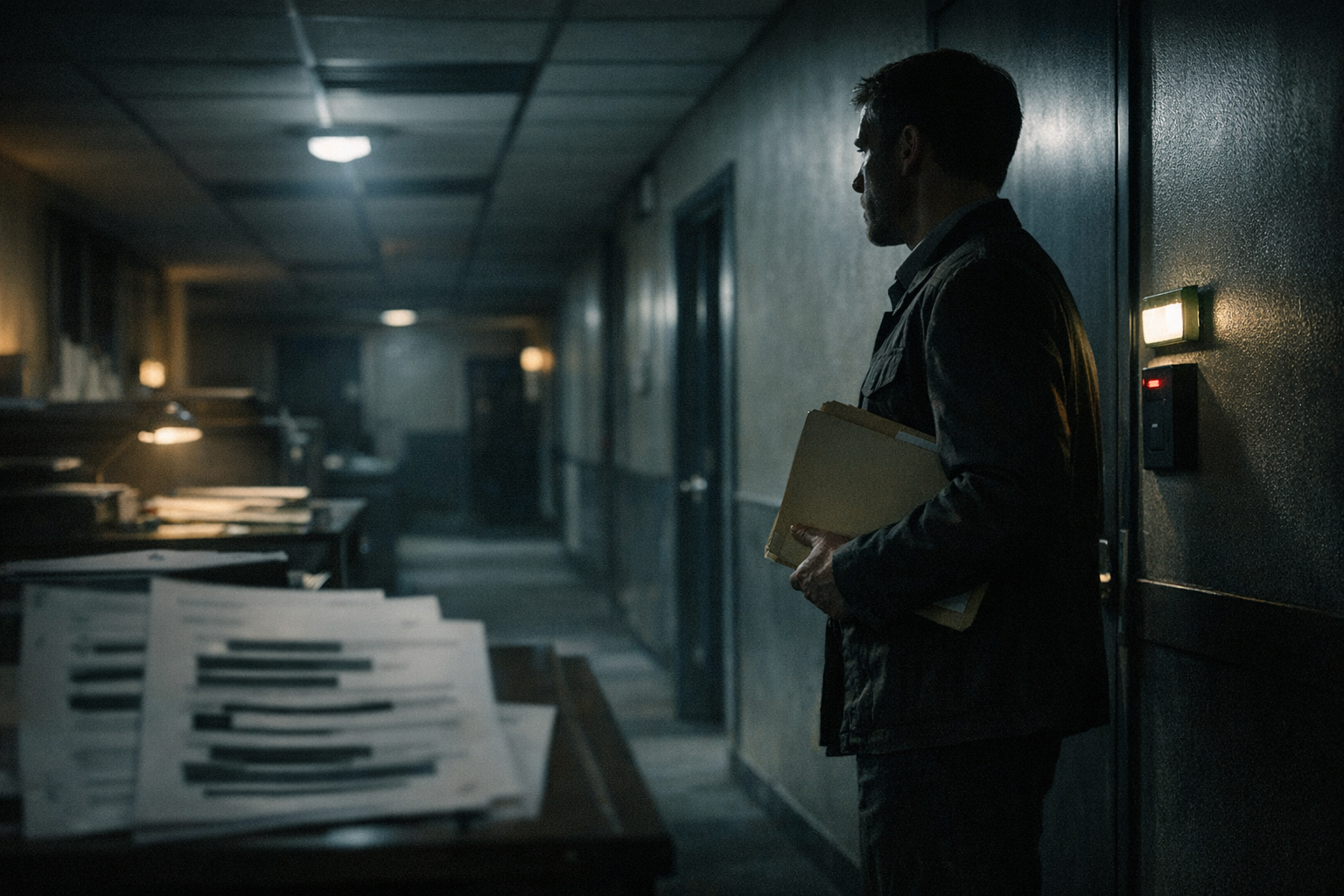
The language is always the same: a witness steps forward, a career stalls, a warning arrives, and suddenly the silence itself starts to look like evidence. In dim hearing rooms, inside redacted complaint filings, and across years of UFO rumors, the idea of hidden pressure has become one of the most powerful engines keeping the mystery alive.
UFO whistleblower retaliation refers to claims that people who report hidden UFO or UAP programs face professional pressure, classification barriers, damaged credibility, or legal risk. Believers argue this pattern shows something real is being buried. The more cautious view is that retaliation claims can be meaningful on their own, but they still do not prove the larger alien or crash-retrieval story behind them.
What Happened
The modern version of this story did not begin with a crashed saucer or a blurry video. It grew out of a newer and more bureaucratic kind of mystery: sworn statements, inspector general complaints, congressional briefings, and public testimony about programs the public cannot see.
That is why the retaliation angle matters so much. It feels less like old UFO folklore and more like a workplace power struggle happening behind secured doors. Instead of asking readers to trust a light in the sky, it asks them to trust a pattern of pressure.
One of the clearest examples came from David Grusch, a former intelligence officer who said he learned of alleged hidden crash-retrieval and reverse-engineering programs and then faced retaliation connected to his efforts to report concerns through official channels. His story gained traction not just because of the extraordinary claims, but because retaliation is something people already understand. Careers can be damaged. Clearances can matter. Silence can be expensive.
In that sense, the retaliation claim gave the larger UFO story a human frame. A person is not just saying, “Something secret exists.” A person is saying, “I tried to raise concerns and paid a price.” That is a much stickier narrative.
Imagine the scene that supporters picture. A witness leaves a secure office after raising a classified concern, checks their phone in the parking lot, and sees their future suddenly getting smaller: fewer calls returned, more warnings about process, more reminders about what cannot be said. Whether or not that exact moment happened in a specific case, that is the emotional shape of the story people believe.
And once that shape is in place, every missing document and every redacted page starts to feel less like an information gap and more like confirmation by silence. That is where this topic becomes more than a personality dispute. It becomes a belief system.
This article’s angle is simple: the real force of the retaliation narrative is not that it proves hidden UFO programs exist. It is that it makes weak or incomplete evidence feel stronger by giving secrecy a human face.
Why People Believe It
People do not find this theory persuasive only because they trust one witness. They find it persuasive because suppression stories have their own logic. If someone speaks and then faces pressure, many readers instinctively ask the same question: why punish them if there is nothing there?
That instinct is understandable. In public life, retaliation often does happen. Whistleblowers in many fields have described intimidation, career damage, and isolation. So when a UFO witness uses the same vocabulary, the claim immediately lands in familiar territory.
There is also a deeper psychological pull. A secrecy story can absorb almost any missing piece. No document? It was buried. No public proof? It is compartmentalized. No direct witness to the full program? People were intimidated. The theory starts protecting itself.
That is one reason modern disclosure stories connect so tightly to posts like UFO Disclosure: Hearings, Whistleblowers, and the Proof Gap. Once hearings and official language enter the picture, suspicion no longer feels fringe. It feels processed, formal, and therefore closer to truth.
The retaliation angle also works because it shifts the emotional center of the debate. Instead of asking, “Did the witness prove a hidden program exists?” people start asking, “Was the witness treated unfairly?” Those are not the same question. But in practice, they often get blended together.
Another reason belief grows is that secrecy around national security is real. Compartmented work exists. Sensitive programs exist. People with clearances really can face legal and professional consequences for mishandling information. So when someone says they are limited in what they can reveal, that part sounds plausible even before the larger claim is tested.
That same pattern shows up in debates around the Schumer UAP Disclosure Act, where the push for records and review can sound to supporters like indirect proof that something major must be there. But a system built to review claims is not the same thing as a system that has already confirmed them.
Claims vs Evidence
Claim: UFO whistleblowers are being silenced, intimidated, or professionally ruined because they know the truth about hidden non-human technology.
What supports that claim: Public statements from figures like Grusch, references to classified reporting channels, and the fact that some officials and lawmakers have treated certain complaints seriously enough to review. There is also a long culture of witness stories about pressure, ridicule, or warning messages after unusual reports.
What that does not automatically prove: that the underlying alien or crash-retrieval claims are true. A retaliation complaint can be real without validating every conclusion attached to it.
This distinction matters. There is a difference between saying, “A person says they faced reprisals after reporting concerns,” and saying, “Therefore a secret UFO recovery program exists.” The first is a specific allegation about treatment. The second is a much larger conclusion that needs its own evidence.
It also matters what kind of retaliation is being described. Some claims refer to formal reprisals, such as blocked access, damaged evaluations, or pressure inside a chain of command. Others are much looser: online ridicule, media skepticism, or the social cost of talking about UFOs. Those are not identical categories.
A misunderstood detail here is that classification barriers can create a very powerful impression without resolving the main question. If a witness says, “I cannot say more in public,” many listeners hear, “What I know must be explosive.” But classified limits only tell us information is restricted. They do not tell us whether the hidden information confirms the witness’s theory, complicates it, or even contradicts it.
This is where David Grusch UFO Claims: What Was Alleged, What Was Verified? becomes useful context. The strongest public evidence in many of these debates is often not direct physical proof. It is testimony about what other people supposedly said, what documents allegedly exist, or what could be shown in secure settings. That can be worth examining, but it is still one step removed from public verification.
There is also a contradiction at the center of the suppression story. Believers often argue that the cover-up is so powerful it can erase records, intimidate witnesses, and block scrutiny for decades. Yet the same system somehow allows repeated leaks, public hearings, press tours, legislation, and a constant stream of claims. That does not make suppression impossible. It does mean the story is messier than a simple all-powerful silence machine.
Reality Check
The most grounded conclusion is not that retaliation stories are fake. It is that they are frequently over-read.
There is no confirmed public evidence that retaliation alone proves hidden alien technology or a secret crash-retrieval program. What it can show, at most, is that conflicts over secrecy, reporting channels, credibility, or workplace power may be real. Those are serious issues. They are just not the same as proof of the biggest theory built around them.
Think about how this works in ordinary life. If someone is pushed out after raising concerns, we can say the situation deserves investigation. But we still would not know whether their full interpretation of events was correct. A punished employee can be sincere and still mistaken about what they think a hidden system actually means.
That is especially important in the UFO space, where several layers of uncertainty can stack on top of each other. A witness may believe a source. That source may be repeating a rumor from inside a compartmented environment. The public then receives only the final retelling, often stripped of the original documents. By the time it reaches readers, the story can feel more solid than the chain beneath it really is.
The retaliation narrative also creates a logical shortcut: if evidence is missing, the absence itself becomes evidence of suppression. That move is emotionally powerful, but it is dangerous. Once every gap becomes proof, the theory stops risking disconfirmation. It becomes hard to test fairly.
What we do know is narrower. Governments keep secrets. Bureaucracies can punish dissent. People in sensitive roles may fear legal exposure, career consequences, or reputation loss. Those facts make UFO retaliation stories plausible enough to take seriously. They do not make the largest hidden-program claims automatically true.
So the better question is not, “Are UFO witnesses ever silenced?” It is, “What exactly was reported, what retaliation is documented, and what evidence exists for the deeper claim behind it?” That keeps sympathy for the witness separate from certainty about the conclusion.
Conclusion
UFO whistleblower retaliation is one of the strongest modern story engines in the disclosure debate because it turns secrecy into something personal. It gives the mystery a victim, a villain, and a reason the public still does not have clean answers.
But that same emotional power can distort how evidence is weighed. A retaliation story may justify scrutiny, oversight, and careful reporting. It does not, by itself, confirm the alien or hidden-program explanation attached to it.
That is why this angle matters. It shows how belief can harden even when proof stays incomplete. The silence can feel meaningful. The pressure can feel real. Yet the gap between “someone may have been punished” and “the biggest UFO claims are true” remains much wider than many readers first assume.
🔎 If this story stayed with you, the author suggests these real cases next:
- UFO Disclosure: Hearings, Whistleblowers, and the Proof Gap
- David Grusch UFO Claims: What Was Alleged, What Was Verified?
- Schumer UAP Disclosure Act: Transparency Push or Proof Hidden Programs Exist?
Explore more Alien & UFO Theories stories here: