
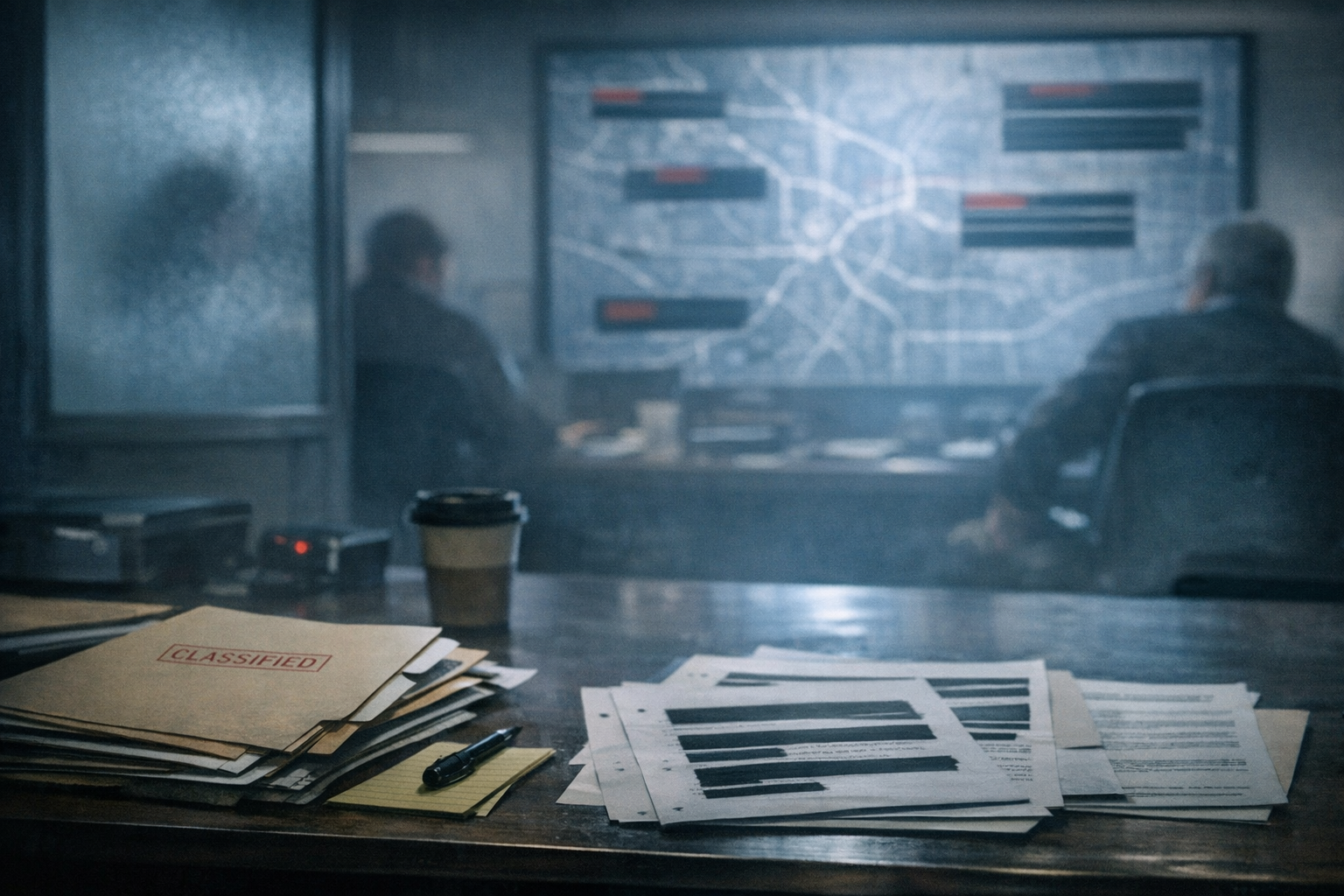
The courtroom had no crowd, no cameras, and almost no public view at all. Behind sealed filings and quiet approvals, the system known as FISA surveillance became one of the clearest examples of why secret government power can feel more frightening than visible government power.
FISA surveillance refers to intelligence-related surveillance authorized under the Foreign Intelligence Surveillance Act, a law created to monitor foreign threats while adding legal oversight. Critics argue it became a secret spy tool that can be stretched, misused, or trusted too easily because so much of the process happens out of public sight. What reality likely shows is more complicated: FISA is a real legal framework with real rules, but its secrecy, past errors, and low-visibility court process have made it a natural magnet for wider suspicion.
What Happened
The story starts in the 1970s, when the United States was forced to confront something many people had long suspected. Intelligence and law enforcement agencies had monitored activists, targeted political groups, and pushed past lines the public assumed were firm. The exposure of those abuses, later examined in the Church Committee hearings, changed the argument from “Could this happen?” to “How do you stop it from happening again?”
FISA was passed in 1978 as part of that answer. In plain English, it was meant to create a legal path for surveillance tied to foreign powers, spies, and national security threats. Instead of letting intelligence agencies act with little formal structure, the law created a special court process. If the government wanted certain kinds of surveillance for foreign intelligence reasons, it would go to the Foreign Intelligence Surveillance Court, often called the FISA Court, and ask for approval.
That sounds straightforward until you picture the process. There is no packed public courtroom and no ordinary public argument between both sides. Much of the work happens in secret because the targets, sources, methods, and intelligence concerns are classified. For officials, that secrecy is the point. For the public, it is the problem.
After 9/11, the stakes and scale of surveillance changed. Fear of another attack pushed the United States toward broader intelligence collection, more aggressive data practices, and a larger security apparatus. As debates around the mass surveillance state grew louder, FISA stopped looking like a technical legal framework and started looking, to many people, like a door into a hidden system they could not inspect.
Then came the moments that hardened distrust. Revelations about surveillance powers, reporting around warrant practices, fights over Section 702, and criticism of how intelligence tools could touch Americans indirectly all fed a simple public feeling: even if the law was written for foreign intelligence, the line between foreign targeting and domestic privacy did not always feel secure. Once that feeling set in, FISA became bigger than the statute itself. It became a symbol.
Imagine an ordinary person seeing the phrase on a headline late at night: “FISA warrant,” “FISA court,” “FISA abuse.” They do not see the full file or the classified justification. They see a locked process and officials asking for trust from outside the room. That is where suspicion starts to outrun reassurance.
Why People Believe It
The unique angle here matters: FISA did not become suspicious because it was imaginary. It became suspicious because it is real. People are not reacting to a fantasy device. They are reacting to an actual legal mechanism that operates mostly out of view. That makes the fear stronger, because it rests on something concrete.
First, secrecy changes how people judge power. A public law can still feel hidden if the most important uses of that law happen behind closed doors. Readers who already distrust intelligence agencies and hidden government power do not need much imagination to see FISA as part of a larger invisible structure. The court exists. The approvals are real. The redactions are real. So the leap from “secret process” to “secret abuse” feels short, even when the evidence for any specific abuse claim is thin.
Second, documented history matters. This site covers old examples because they keep shaping modern belief. COINTELPRO was real. Intelligence overreach was real. Deception in the name of national security was real. When people hear that a modern surveillance system works in secret, they do not start from zero. They start from a stack of earlier cases that taught them hidden authority can cross lines.
Third, the structure of the FISA Court invites misunderstanding. Because proceedings are not fully open, critics often assume approval means rubber-stamping. Defenders argue that secrecy is necessary when cases involve foreign intelligence methods and classified risks. Both sides are reacting to the same basic fact: the public cannot easily observe the process the way it can in ordinary courts. That creates a trust gap no press release can fully close.
Fourth, political battles gave FISA a second life beyond national security law. Once the phrase entered partisan fights, it stopped being just a legal acronym and became a cultural signal. Either way, the term picked up emotional charge.
And finally, people believe FISA-related fears because the law sits at the perfect intersection of three anxiety points: surveillance, secrecy, and government discretion. On their own, each of those creates concern. Combined, they create a narrative engine that almost runs by itself.
Claims vs Evidence
Claim: FISA is basically a secret spy tool aimed at ordinary Americans.
Evidence: That claim is too broad. FISA was created as a national security law focused on foreign intelligence and related threats, not as a public-facing domestic dragnet statute. However, critics are not inventing the concern from nothing. Surveillance authorities can affect Americans indirectly, especially when communications overlap with foreign targets or when collection rules are broad enough to raise civil-liberties concerns. The stronger version of the claim is not “FISA equals total domestic spying,” but “a secret intelligence framework can still create real privacy risks.”
Claim: The FISA Court approves whatever the government wants.
Evidence: The court has long had very high approval rates, which fuels the idea that oversight is weak. But those numbers do not tell the whole story, because requests may be revised before final submission. Critics still have a fair point: an almost entirely secret court will struggle to look independent to the public.
Claim: Abuse allegations prove the whole framework is corrupt.
Evidence: That jumps too far. Specific errors, disputed warrant applications, or oversight failures can show real weaknesses without proving every use of the law is fraudulent. The key distinction is between documented criticism and unlimited suspicion. A system can be flawed, overly secretive, or vulnerable to misuse without becoming proof of every wider conspiracy claim attached to it.
Claim: If officials say the process is legal, the public should simply trust it.
Evidence: That argument is also weak. Legality and legitimacy are not identical. A hidden process can be lawful on paper and still produce public distrust if people believe the oversight is too insulated, the disclosures too partial, or the correction mechanisms too slow. That is why FISA fits naturally beside broader concerns explored in Government Transparency Myth: systems do not earn trust just by existing; they earn it by being understandable and accountable.
Reality Check
The most grounded reading is that FISA is neither a cartoon villain nor a harmless bureaucratic formality. It is a real surveillance framework built for serious intelligence threats, but one that depends heavily on secrecy, official discretion, and public trust. That combination almost guarantees controversy.
The real reason FISA keeps feeding conspiracy energy is simple: it confirms enough of the public fear to keep the imagination alive. There really is a secret court. There really are classified requests. There really have been controversies about how intelligence powers are used. Once those pieces are visible, many people fill the unseen gaps with the darkest possible interpretation.
But there is a difference between a system that deserves scrutiny and a system that proves every suspicion. FISA gives critics legitimate questions to ask about privacy, oversight, and accountability. What it does not automatically do is prove a limitless hidden-government machine aimed at anyone, anytime, with no real constraints.
That distinction can feel unsatisfying because it lands in the middle. Yet that is where most serious analysis belongs. A law created to prevent unchecked spying can still become part of a larger hidden-power debate if the oversight structure remains too opaque for the public to trust.
So if you strip away the louder rhetoric, the core reality is this: FISA became a magnet for suspicion because it shows how democratic societies try to supervise secret power without fully exposing it. That is a difficult balance to maintain. When it works, most people never notice. When confidence breaks, the silence around the system starts to sound like proof all by itself.
Conclusion
FISA surveillance is best understood as a real legal framework that grew into a larger symbol of hidden authority. People do not fear it only because of rumors. They fear it because secrecy, history, and documented controversy make the system hard to trust from the outside.
That does not mean every dramatic claim about FISA is true. It means the law sits in exactly the kind of gray zone where modern conspiracy thinking thrives: part fact, part fear, part justified scrutiny, and part speculation piled on top of a structure few citizens ever get to see clearly.
And that may be the most important point. FISA is not just a law people argue about. It is a reminder that once government power moves behind closed doors, even legal oversight can start to look, from the public side of the wall, like something much darker.
🔎 If this story stayed with you, the author suggests these real cases next:
- Mass Surveillance State: How Much Does the Government Really See?
- Intelligence Agencies and Hidden Government Power: How Much Happens Behind Closed Doors?
- Church Committee Hearings: Reform Breakthrough or Proof Hidden Power Needed Exposure?
Explore more Political Conspiracies stories here: