
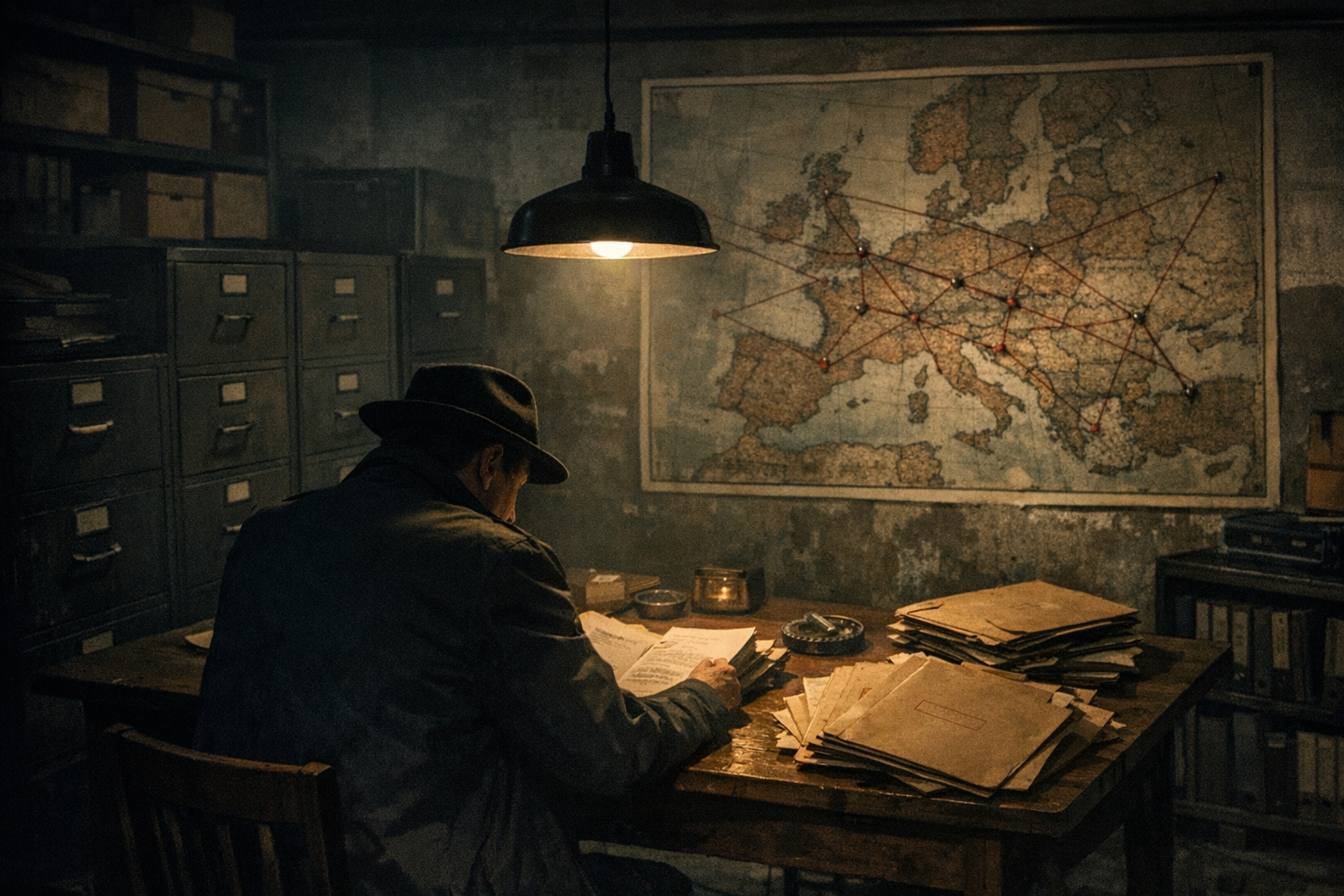
The network was not supposed to be visible. Hidden behind the calm language of defense planning, buried in Cold War files and whispered through parliamentary scandals, Operation Gladio begins in locked offices, coded contacts, and a Europe preparing for an invasion that never came. That is what makes the story so unsettling: part of it is not rumor at all, but a real secret structure that existed for years before much of the public knew its name.
What Happened
After World War II, Western Europe entered a new kind of fear. The Nazi threat was gone, but the Soviet Union now dominated Eastern Europe, and military planners in the West worried about what would happen if communist forces pushed farther into the continent. In that atmosphere, several NATO-linked countries developed secret “stay-behind” networks. The basic idea was blunt: if a Soviet invasion happened, these covert cells could remain in place, gather intelligence, help resistance groups, and support sabotage behind enemy lines.
That core concept is the documented starting point for Operation Gladio. The name is most closely associated with the Italian branch of the broader stay-behind system, though similar arrangements existed in multiple countries. For years, much of that structure stayed out of public discussion. It was designed that way. Secret networks are not built to advertise themselves, and during the Cold War, many officials would have argued that secrecy was the entire point.
The public story changed in 1990, when Italian Prime Minister Giulio Andreotti acknowledged the existence of Gladio. Suddenly, a secret anti-invasion network that many ordinary people had never heard of was no longer just the subject of speculation. There were documents, political statements, inquiries, and a rapidly growing argument over what the network had really done. If all Gladio had been was a dormant emergency structure, the revelation would still have been startling. But Italy’s political violence and “strategy of tension” debates gave the story a much darker edge.
That darker edge came from timing and context. Italy had lived through bombings, extremist violence, kidnappings, and years of public suspicion about hidden manipulation. Once Gladio became public, many people started asking whether a secret stay-behind system had done more than prepare for invasion. Had parts of it influenced domestic politics? Had it intersected with intelligence agencies, far-right militants, or efforts to shape public fear? Those questions turned a real covert program into a much wider conspiracy battlefield.
There is an easy human scene to imagine here. Picture an Italian citizen in the early 1990s opening a newspaper and learning that a hidden network tied to Cold War planning really did exist inside the state. Even before the bigger accusations were proven or disproven, trust would shift instantly. Once a public learns one secret architecture was real, every unexplained event around it starts looking less isolated.
That is one reason Gladio gets mentioned alongside stories like Operation Mockingbird: Did the CIA Really Shape the News?. In both cases, the public is not reacting to pure fantasy. It is reacting to the discovery that intelligence-linked activity, media influence, and covert planning have sometimes existed beneath the cleaner official story.
Why People Believe It
People believe the strongest versions of the Gladio story because the foundation beneath them is real. Unlike many theories that begin with a blurry claim or a single dramatic witness, Gladio begins with confirmed secret structures. There really were stay-behind networks. There really was official acknowledgment. There really were parliamentary inquiries and journalistic investigations. That matters because it moves the discussion out of the realm of “could this have existed?” and into the much harder question of “how far did it go?”
Another reason the theory survives is that the Cold War rewarded deniability. Intelligence agencies, allied services, unofficial assets, and ideologically motivated groups often operated in overlapping shadows. That environment makes neat separation difficult. Even when evidence points clearly to one part of the story, it can leave enough ambiguity around the edges for larger suspicion to keep growing.
Italy’s Years of Lead also gave the theory emotional power. Bombings and political violence do not feel abstract when they sit inside living memory. If a secret network is later revealed in the same country and period, many people will naturally wonder whether the hidden system and the public bloodshed ever touched. It is not a crazy question. It is a question born from timing, secrecy, and the ordinary instinct to connect hidden institutions to visible trauma.
There is also a pattern effect that appears in many political conspiracy stories. Once the public learns that states have really used deception, covert influence, or unofficial channels before, each new revelation lowers the barrier for the next suspicion. That same dynamic appears in False Flag Operations: How Real Deception Fuels Bigger Political Theories, where real historical deception becomes fuel for much broader claims that are not all equally supported.
Finally, Operation Gladio persists because it sits in the exact emotional zone conspiracy readers find hardest to resist: partly documented, morally serious, and still incomplete. The story does not need aliens, magic, or impossible technology. It only needs secret power, democratic anxiety, and enough missing clarity to keep the file open.
Claims vs Evidence
Claim: Operation Gladio was a real secret NATO-linked stay-behind network in Cold War Europe.
Evidence: This claim is strongly supported. Officials acknowledged the existence of Gladio in Italy, and historians, journalists, and parliamentary processes have documented the broader stay-behind framework in multiple countries. The basic existence of the network is not the speculative part of the story.
Claim: Gladio was created to resist a possible Soviet invasion.
Evidence: This is the official and historically supported purpose of the network. During the Cold War, Western governments genuinely feared invasion, internal subversion, and strategic collapse. Secret resistance planning fit that mindset. Whether that purpose remained narrow in practice is a separate question.
Claim: Elements tied to Gladio were involved in domestic political manipulation, including support for far-right violence or false-flag style terror.
Evidence: This is where the story becomes far more contested. There were serious allegations, judicial investigations, and intense public debate in Italy about links among intelligence structures, extremist groups, and acts of terror. Some evidence suggested relationships among covert actors, informants, and political manipulation. But the public record does not deliver one simple master document proving a single clean chain from NATO planning to every alleged attack. The strongest version of the claim remains argued, not fully settled.
Claim: Operation Gladio proves Western democracies secretly controlled politics through hidden violence across Europe.
Evidence: That conclusion goes beyond what the evidence can safely carry. Gladio proves that covert anti-invasion networks existed. It also supports serious suspicion that secret structures and anti-communist priorities sometimes blurred into domestic political interference in certain contexts. But turning that into a universal explanation for decades of European politics requires leaps the available evidence do not fully justify.
Claim: The secrecy around Gladio is itself proof that all the darker allegations are true.
Evidence: Secrecy explains why suspicion grew, but secrecy alone is not confirmation. A covert military network would, by design, be hidden. That hidden status tells us something important about state behavior. It does not automatically confirm every later accusation attached to it.
Reality Check
The clearest reality check is that Operation Gladio is neither a baseless myth nor a fully solved super-conspiracy. It is more disturbing than a fake story because the central secret really existed. But it is less tidy than many viral retellings suggest because the evidence does not collapse into one dramatic sentence that explains everything.
What we do know is enough to matter. Western states built covert stay-behind systems. Those systems were kept from broad public knowledge. In Italy especially, the revelation landed in a country already shaped by terrorism, ideological conflict, and deep mistrust. Under those conditions, the discovery of a hidden network was almost guaranteed to generate larger theories about who steered fear and why.
At the same time, careful analysis has to resist a common trap. Once a real secret program is discovered, every unsolved event near it starts looking connected. Sometimes that instinct uncovers genuine overlap. Other times it turns one proven secret into a container for many weaker claims. That is exactly why Gladio requires discipline. The story is strongest when it stays close to the documented stay-behind framework, the confirmed concealment, and the specific allegations that can be tied to real inquiry.
It is also important to separate levels of certainty. The existence of Gladio is highly credible. The broad climate of anti-communist covert action around it is also credible. The claim that every major act of political violence tied to the Years of Lead was centrally orchestrated through Gladio is much harder to prove from the public record. Some accusations remain deeply serious without becoming fully closed cases.
That leaves Operation Gladio in Crack the Conspiracy terms as partially explained. The network was real. The secrecy was real. The suspicion was not irrational. But the biggest claims built on top of that foundation still outrun the strongest confirmed evidence available to the public.
And maybe that is why the story refuses to die. It speaks to a fear modern democracies have never fully escaped: that institutions built to defend the system can, under pressure, begin shaping the system from behind the curtain. Once that possibility enters public memory, it does not vanish when the files are closed. It lingers.
Conclusion
Operation Gladio endures because it offers something rare in conspiracy culture: a secret architecture that turned out to be real. That alone gives the story weight. It also gives later suspicion a durable engine, because once a hidden network is confirmed, citizens naturally revisit old violence, old scandals, and old denials with different eyes.
The responsible conclusion is not that every dark allegation around Gladio has been proven. It is that the revelation permanently changed what reasonable people could dismiss. A real stay-behind network existed. Its secrecy mattered. Its political implications were serious. Beyond that, each larger accusation still has to earn its case through specific evidence, not just atmosphere.
In the end, Gladio is most powerful not as a finished answer, but as a warning about what secret structures do to public trust. Once people learn a hidden system was there all along, even the official truth starts sounding like it arrived late.
🔎 If this story stayed with you, the author suggests these real cases next:
- Operation Mockingbird: Did the CIA Really Shape the News?
- False Flag Operations: How Real Deception Fuels Bigger Political Theories
- Deep State Explained: Hidden Ruling Network or Just the Machinery of Government?
Explore more Political Conspiracies stories here: