
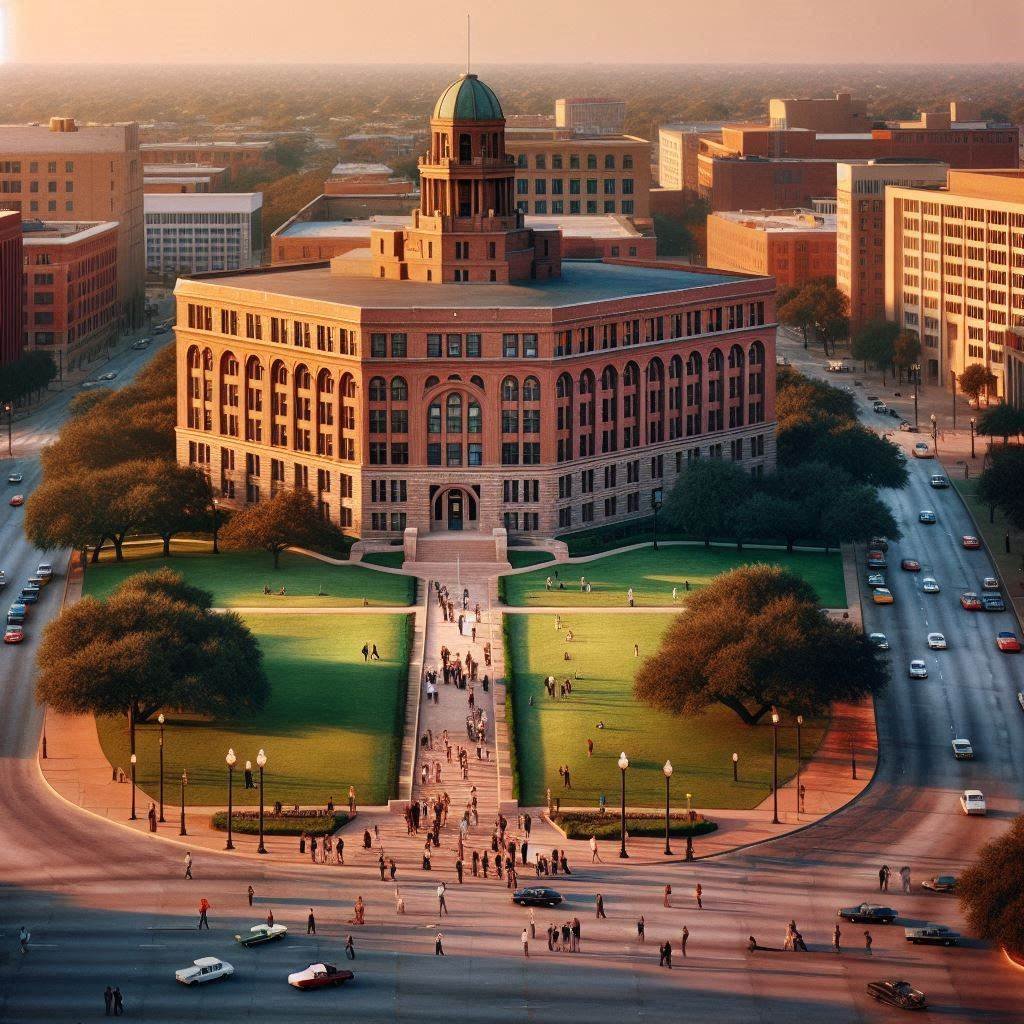
The crowd was smiling. The sun was shining. And then, in just a few seconds… everything changed.
On November 22, 1963, people lined the streets of Dallas, Texas, waiting to see President John F. Kennedy pass by in an open motorcade.
Some waved flags. Others held cameras. It felt like a normal, hopeful day.
Then came the sound that no one expected.
A sharp crack echoed through the air.
Then another.
At first, some people thought it was fireworks. Others froze, unsure of what they had just heard.
But within seconds, it became clear—something had gone terribly wrong.
The President slumped forward. Chaos broke out. People started running, ducking, shouting.
And just like that, one of the most shocking moments in American history had begun.
Within hours, a suspect was arrested: Lee Harvey Oswald.
Two days later, Oswald was shot and killed on live television.
No trial. No full explanation.
And for many people, that’s where the real mystery started.
—
What Happened That Day
According to the official investigation, Oswald positioned himself on the sixth floor of the Texas School Book Depository.
From there, he had a clear view of the motorcade route below.
The report states that he fired three shots.
One missed.
One struck President Kennedy.
And one caused fatal injuries.
Texas Governor John Connally, who was riding in the same car, was also hit but survived.
Shortly after the shooting, Oswald left the building.
About 45 minutes later, a police officer named J.D. Tippit was shot and killed. Oswald was arrested soon after in a nearby theater.
The case seemed to move quickly. Too quickly, some would later argue.
—
The Official Conclusion
The Warren Commission was created to investigate the assassination.
After months of work, they reached a clear conclusion:
Lee Harvey Oswald acted alone.
No second shooter. No larger conspiracy.
Just one man, one rifle, and a few seconds that changed history.
But for many people, that explanation didn’t sit right.
—
The First Doubts
Even in the days right after the assassination, people started asking questions.
How could one person pull this off so quickly?
Why did some witnesses say the shots came from different directions?
And why was Oswald killed before he could explain anything?
These weren’t wild conspiracy theories at first.
They were simple doubts.
And over time, those doubts grew into something much bigger.
—
The Conspiracy Claims
Over the years, several major claims became central to JFK conspiracy theories.
Let’s break them down one by one.
—
Claim #1: There Was a Second Shooter
Many witnesses reported hearing shots from a grassy area near the road, often called the “grassy knoll.”
This led to the belief that there had to be more than one gunman.
If true, that would mean a coordinated attack—not a lone shooter.
—
Claim #2: The “Magic Bullet” Is Impossible
One bullet was said to have passed through Kennedy and then hit Governor Connally, causing multiple wounds.
Critics called it the “magic bullet,” arguing that its path didn’t make sense.
—
Claim #3: Oswald Was Part of a Bigger Plot
Because Oswald had previously lived in the Soviet Union during the Cold War, some believed he was connected to foreign governments.
Others suggested involvement from the CIA, the Mafia, or even people within the U.S. government.
—
Why These Claims Sound Convincing
At first glance, these ideas can feel believable.
This wasn’t just any crime—it was the assassination of a president.
People expect something that big to have a bigger explanation.
There’s also the timing.
The Cold War was happening. Tensions were high. Trust in institutions wasn’t perfect.
And then there’s the biggest factor of all:
Oswald never got to tell his story.
When the main suspect is killed before trial, it leaves a gap—and people naturally try to fill that gap with their own explanations.
—
Reality Check: What the Evidence Shows
Now let’s step back and look at what the evidence actually supports.
—
The Second Shooter
Investigators carefully studied Dealey Plaza.
They found that the area creates strong echoes.
Sounds can bounce off buildings, making it seem like they’re coming from different directions.
Later reenactments showed that the shots could have come from a single location.
While the witness accounts were real, the environment could easily explain the confusion.
—
The “Magic Bullet”
The bullet’s path seems strange at first—until you look at the seating positions.
Governor Connally was not sitting directly in front of Kennedy. He was seated slightly lower and turned to the side.
When investigators recreated the positions accurately, the bullet’s path became much more realistic.
It wasn’t magic—it was misunderstood geometry.
—
Oswald’s Connections
Yes, Oswald had lived in the Soviet Union.
Yes, his background was unusual.
But after years of investigation, no solid evidence was found linking him to a coordinated plot.
No confirmed ties to the CIA. No verified orders from foreign governments.
What investigators did find was a man with strong opinions, personal frustrations, and a desire to be noticed.
—
The Moment That Changed Everything
There’s one scene that continues to shape how people view this case.
It wasn’t in Dallas. It was two days later.
Oswald is being moved through a police station, surrounded by officers and reporters.
Cameras are rolling live.
Suddenly, a man steps forward.
A gun is raised.
A shot is fired.
Oswald collapses on the floor.
The man who could have answered the world’s questions… is gone.
That moment didn’t just end a life.
It created decades of suspicion.
—
Why the Conspiracy Still Exists
Even today, many people believe there must be more to the story.
And it’s not hard to see why.
The case has all the elements that keep conspiracies alive:
• A shocking event
• A powerful figure
• Confusing details
• An incomplete feeling ending
But there’s something deeper at play.
People don’t just want answers.
They want answers that feel big enough to match the event.
And sometimes, the simplest explanation doesn’t feel satisfying.
—
The Truth Behind the Mystery
After decades of investigation, document releases, and analysis, one thing remains consistent:
There is no solid, verifiable evidence proving a large-scale conspiracy behind the assassination of President John F. Kennedy.
That doesn’t mean every detail is perfectly explained.
But it does mean that the major conspiracy claims have not been supported by reliable proof.
In the end, the JFK assassination is not just a story about what happened.
It’s a story about how people react when something shocking doesn’t feel fully explained.
Because sometimes, the biggest mystery isn’t the event itself.
It’s why we keep searching for something more.
—
🔎 Want to explore more conspiracy theories and uncover the truth behind them?
Some of the most famous theories seem convincing—until you break them down.
- Moon Landing Hoax — What Really Happened on Apollo 11
- Area 51 Secrets — What’s Actually Hidden There?
- Anti-Vaccine Conspiracies — How Fear Turned Into Belief
Explore more here:
👉 Conspiracy Theories