
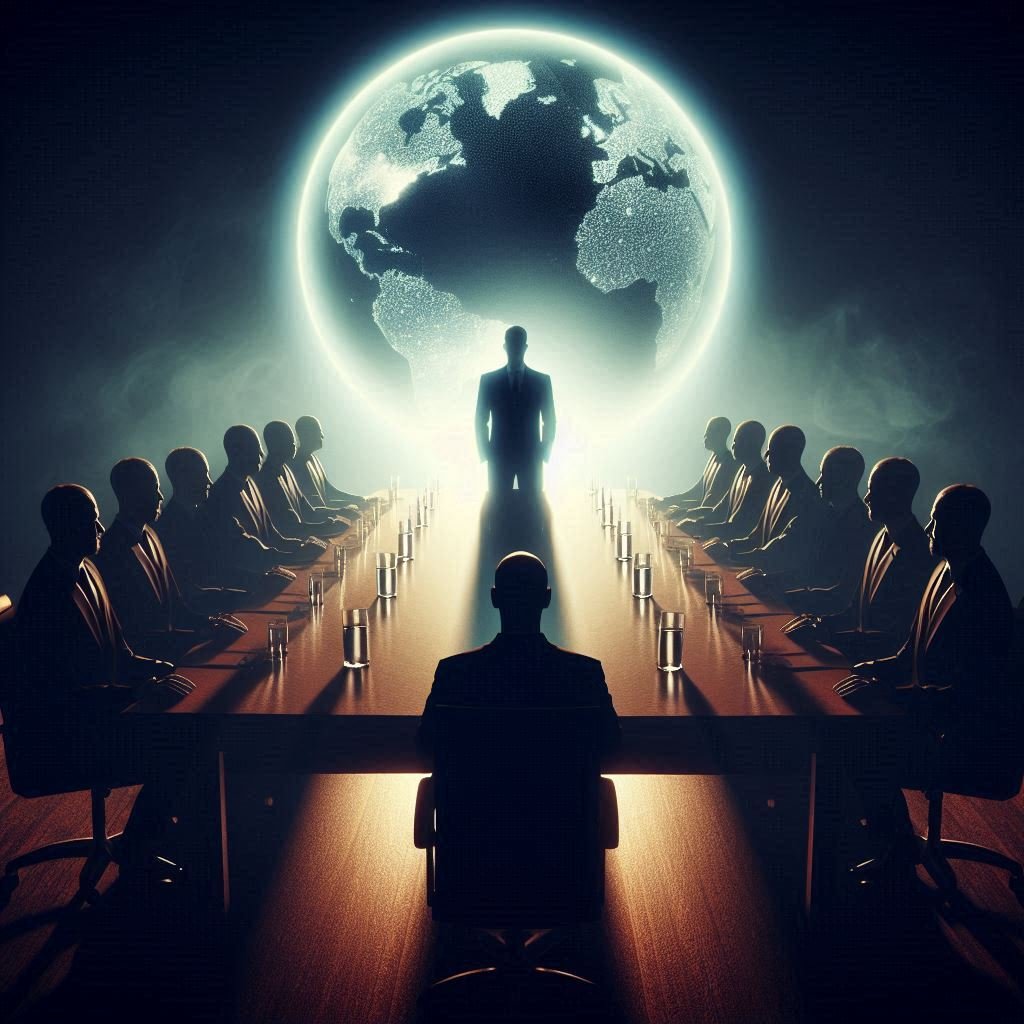
The phrase sounds almost too large to challenge. A “new world order” does not point to one scandal, one agency, or one election. It points to the suspicion that global chaos is only the surface layer, and that somewhere behind it sits a small class of people shaping finance, policy, media, and conflict from a place the public never gets to see.
The New World Order conspiracy is the belief that a hidden elite is gradually steering the world toward centralized global control. Supporters claim powerful networks use institutions, crises, and private influence to weaken nations and consolidate authority. The more grounded reality is that elite influence, secrecy, and coordination do exist, but there is no verified evidence that one unified hidden command structure secretly controls the entire world.
What Happened in the New World Order Conspiracy
The New World Order, often shortened to NWO, did not begin as a single neat theory with one founder and one official doctrine. It formed by layering together older fears about concentrated power, secret societies, banking influence, international institutions, and political decisions that seemed to happen far above ordinary voters. Over time, people stopped seeing those as separate issues and started reading them as pieces of one larger system.
The phrase itself has a real political history. Leaders have used “new world order” language in public speeches to describe changing global conditions, especially after major geopolitical shifts. That matters because conspiracy culture did not invent the phrase from nowhere. It borrowed a real term from real statecraft and turned it into a deeper claim: not that countries wanted more cooperation, but that powerful people wanted more control.
Once that shift happened, the theory became an interpretation layer for almost every modern fear about hidden power. Economic crises, military interventions, media narratives, surveillance systems, and elite conferences could all be folded into the same story. The NWO stopped being just one allegation and became a framework for explaining why so many people feel the visible world is not where the real decisions are made.
That is why the theory overlaps naturally with pages like Shadow Governments: Who Really Pulls the Strings Behind Power? and Deep State Explained: Hidden Ruling Network or Just the Machinery of Government?. Those ideas are not identical, but they sit in the same mental neighborhood. When readers suspect that policy is shaped by unelected influence, permanent institutions, or elite coordination, the New World Order becomes the broadest version of that suspicion.
Private gatherings also helped the theory harden into something more concrete. A meeting like Bilderberg Group Meetings: Private Global Summit or Proof of Elite Coordination? may be a real event with a real guest list and real secrecy around discussion. For believers, that kind of setting feels like the missing room where public narratives stop and actual control begins. The visible facts are enough to create suspicion, and the lack of total transparency invites people to fill the gap with much larger conclusions.
Why People Believe It
People believe the New World Order theory because it offers a simple organizing story for a world that often feels fragmented, unstable, and unfair. When ordinary people see wars, debt crises, censorship debates, lobbying power, and policies that seem insulated from public consent, it is tempting to assume those are not separate failures but signs of a coordinated design. The theory turns complexity into intention.
It also feels believable because elite influence is not imaginary. Wealth is concentrated. Powerful institutions really do shape public life. Lobbyists, intelligence agencies, multinational corporations, and political networks often have access that ordinary citizens do not. Once a person accepts that power is unevenly distributed, the jump to “there must be a hidden top layer” can feel emotionally smaller than it should.
Another reason the theory survives is that real opacity exists at exactly the points where trust is weakest. Closed-door diplomacy, classified programs, private conferences, opaque financial structures, and carefully managed public messaging all create the sense that important decisions happen outside democratic visibility. People do not need to believe every detail to start feeling that the official version of events is incomplete.
Modern “control system” fears reinforce the theory too. Readers who worry about digital identity, financial tracking, or programmable restrictions often connect those concerns to a bigger centralization narrative. That is where a post like CBDC Conspiracy: Financial Control Grid or a Fear Built on Real Surveillance Anxiety? becomes relevant. Even though a central bank digital currency is a specific policy topic, people often interpret it as one possible tool inside a much larger imagined architecture of control.
The theory also spreads because it is flexible. If governments disagree, believers can say conflict is staged. If leaders change, they can say the system stays the same underneath. If evidence is missing, secrecy becomes part of the proof. That flexibility makes the theory emotionally durable, because almost any event can be absorbed into it without forcing a clean test that might make it fail.
Claims vs Evidence
Claim: A single hidden elite already coordinates governments, media, banks, and global institutions under one plan. Evidence: There is no verified evidence proving one unified command structure secretly controls the world. There is evidence that powerful networks influence policy, shape narratives, and protect institutional interests, but that is different from a fully integrated hidden world government.
Claim: Private meetings among influential figures prove secret control. Evidence: Private gatherings can absolutely matter, and they can concentrate influence in ways the public should scrutinize. But the existence of a closed meeting does not automatically prove a master plan. It proves access, networking, and limited transparency. The step from influence to total covert rule still requires evidence that has not been publicly established.
Claim: Global crises are deliberately engineered to push populations toward centralization. Evidence: Some crises do expand state power, reshape markets, or justify new controls. That is a real pattern worth watching. But the claim that crises are all designed by one hidden coordinating group is much broader than the proof available. Complex events often involve competing interests, opportunism, bureaucratic inertia, and policy failure rather than one invisible hand.
Claim: International cooperation is just a cover for global takeover. Evidence: International systems are real, and some people reasonably worry about democratic distance when decisions move upward into large institutions. Still, cooperation is not the same as covert conquest. Countries continue to disagree, undermine one another, and pursue self-interest constantly. That messy reality works against the idea of one seamless ruling structure.
Claim: New technology and finance systems are being built to complete the NWO endgame. Evidence: Surveillance tools, digital identity debates, and payment modernization can all raise legitimate civil-liberties concerns. But the evidence usually supports narrower warnings about mission creep, overreach, and concentration of power rather than proof of one finalized total-control blueprint. The danger may be real without matching the largest version of the theory.
The most important distinction is this: the theory treats scattered elite influence as evidence of one secret center. The evidence more often shows overlapping power blocs, incentives, and institutions that can still be harmful or unaccountable without being perfectly unified.
Reality Check
The strongest reality check is that the New World Order conspiracy survives because it is built on a mix of truth and overreach. The truth is that power is not evenly distributed, transparency is often limited, and ordinary people are right to ask who benefits when large systems move in the same direction. The overreach is the leap to one hidden director’s room where everything is coordinated under a single plan.
That leap matters because it can flatten important differences. A corrupt deal, an intelligence overreach, a private summit, and a global regulatory push are not automatically one machine. Sometimes they share incentives. Sometimes they do not. Treating every elite action as evidence of one master conspiracy can actually make real accountability harder, because the specifics disappear inside a giant symbolic theory.
At the same time, dismissing the theory entirely misses why it keeps returning. People are responding to genuine experiences of distance from power. They see systems that feel unresponsive, narratives that change, and decisions made by people they did not choose. The NWO framework gives emotional shape to that distrust, even when its biggest claims outrun the evidence.
So the cleaner interpretation is not that the world is secretly run by one confirmed hidden government, and not that all fears about elite control are silly. It is that modern life gives people enough real examples of concentrated influence, limited transparency, and institutional self-protection that a totalizing theory can keep rebuilding itself around them.
Conclusion
The New World Order conspiracy remains powerful because it promises a single explanation for a world full of unequal power, closed networks, and public distrust. It tells readers that confusion is only apparent, and that hidden order sits behind the chaos.
What we can actually support is more restrained and, in some ways, more useful. Elite influence is real. Secrecy is real. Coordination among powerful actors is real. But there is still no verified proof that one unified hidden group secretly controls the entire planet. The New World Order works best as a parent theory for broader elite-control fears, not as a proven map of how the world is literally governed.
If this story stayed with you, these related investigations are worth reading next:
- Shadow Governments: Who Really Pulls the Strings Behind Power?
- Deep State Explained: Hidden Ruling Network or Just the Machinery of Government?
- CBDC Conspiracy: Financial Control Grid or a Fear Built on Real Surveillance Anxiety?
Explore more Political Conspiracies stories here: