
The most powerful part of a UFO story is often the part nobody can see. A witness might describe a strange light in the night sky, but the moment people hear that NORAD or military radar tracked it too, the mystery hardens into something that feels almost untouchable — as if the real proof exists somewhere behind a classified door.
NORAD UFO tracking usually refers to claims that military radar systems detected unknown objects moving in unusual ways, sometimes alongside pilot or witness reports. Supporters treat radar as hard proof because it sounds technical, official, and less emotional than eyewitness testimony. The more cautious reality is that radar can confirm that something was detected, but public cases often stop well short of proving what that something actually was.
What Happened
The idea of military radar catching UFOs did not appear out of nowhere. It grew over decades, case by case, as civilian sightings crossed paths with air-defense systems, fighter intercepts, and later public discussions about UAPs. In many retellings, radar is the turning point — the detail that seems to lift a story out of folklore and into evidence.
That is why NORAD gets pulled into the conversation so often. The command exists to watch the skies, track aircraft, and respond when something unusual enters North American airspace. To believers, that makes it the perfect hidden witness. If anything truly strange crossed the radar picture, they assume NORAD would know first.
But the public record is thinner than the myth around it. There are many stories about military tracking, scrambled jets, and mysterious returns. There are far fewer cases where raw radar files, complete sensor logs, and full technical context have been released in a way ordinary readers can inspect for themselves.
A good example of how this works can be seen in stories that blend witness accounts with military systems. In cases like Pentagon UFO Videos: What the Navy Footage Confirmed – and What It Didn’t, the public got real military footage, but not enough surrounding sensor data to settle the biggest questions. The footage was enough to keep the case alive, but not enough to close it.
The same pattern appears in older radar-heavy stories. During episodes such as the Belgian UFO Wave: Mass Sighting, Radar Case, or a Story Shaped by Expectation?, radar is often repeated as if it provided a final answer. In reality, it strengthened the mystery while leaving room for debate about what the instruments were actually showing, how operators interpreted the data, and what later retellings added on top.
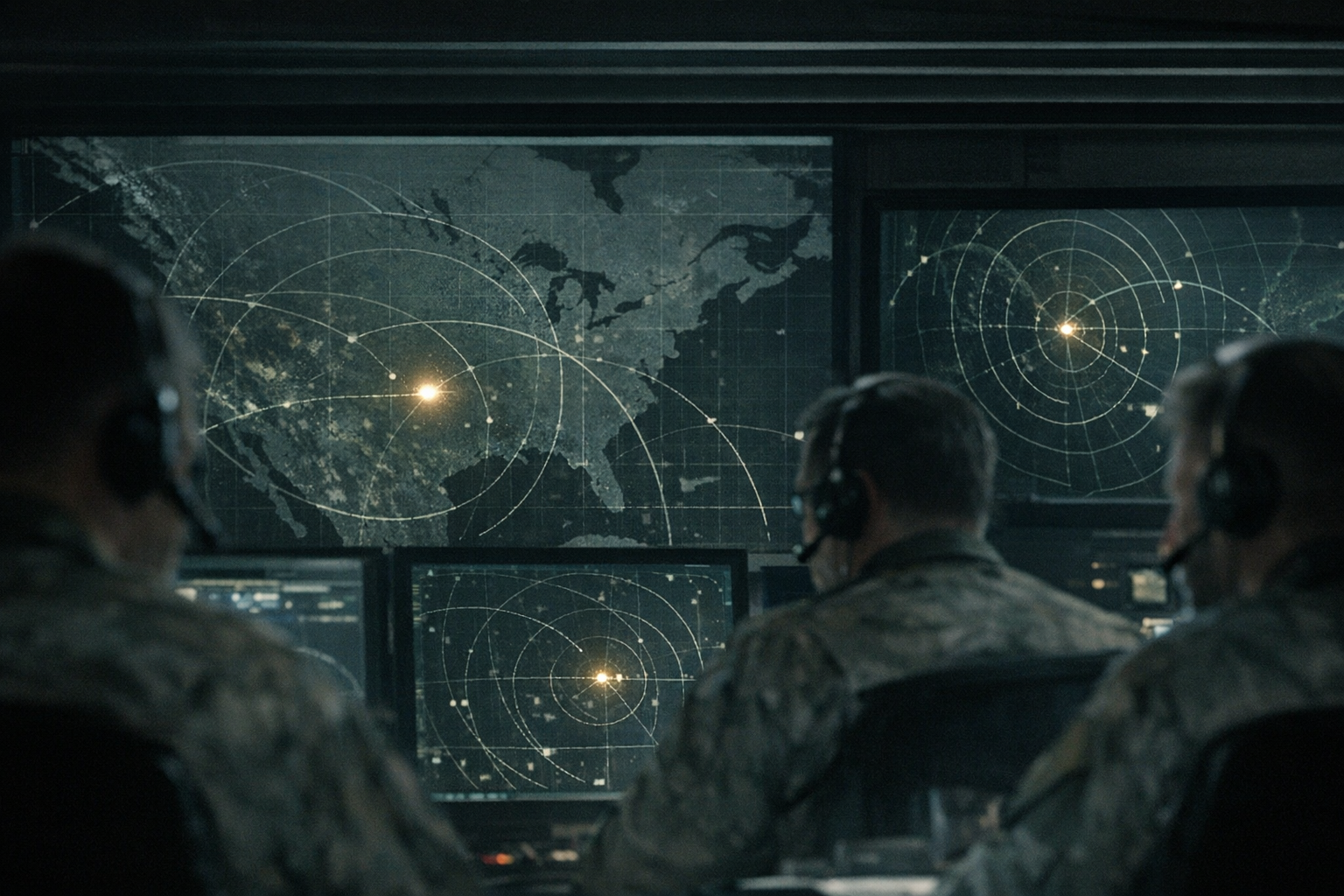
Imagine a radar operator on a night shift. The room is dim. Voices stay short and procedural. A contact appears, then shifts, then disappears, then comes back in a way that does not fit the calm rhythm of normal tracking. That moment is real enough to become unforgettable. But an unforgettable moment is not the same thing as a complete technical record, and that gap matters more than most summaries admit.
This is where the NORAD angle becomes so sticky. People do not just want to know whether radar saw an object. They want to know whether a top-level defense network quietly confirmed something extraordinary and then buried the proof. The problem is that a story can gain enormous force from that possibility even when the released evidence never reaches that level.
Why People Believe It
Radar carries authority. Most people do not understand the fine detail of how radar systems work, but they do understand that the military relies on them for serious decisions. That makes radar feel objective in a way witness memory never can. If a person can be mistaken, a machine seems less likely to be.
There is also a trust problem underneath the radar story. Many readers assume that if military systems detected something unusual, officials would never share the full picture. That suspicion is not completely irrational. Governments really do classify data, withhold technical details, and avoid exposing the limits of their sensor systems. Once people know that, they start to assume the missing information must be explosive.
Another reason belief grows is that radar sounds more precise in hindsight than it often is in practice. When a story gets passed from article to video to forum thread, complex phrases get compressed into something simpler and stronger. “Unidentified radar return” becomes “tracked craft.” “Unclear sensor event” becomes “confirmed object.” A cautious official statement becomes evidence of a cover-up simply because it did not explain enough.
That dynamic is especially powerful in military UFO stories. Articles like UFOs Over Nuclear Bases: Security Threat or the Pattern That Won’t Go Away? and Malmstrom UFO Incident: Missile Shutdown Mystery or a Story That Grew Beyond the Evidence? show why these cases endure. They combine national security, partial records, and the possibility that someone in authority knew more than the public ever heard.
There is also a psychological ladder at work. A lone witness can be dismissed. Multiple witnesses feel stronger. Add a radar claim, and the story climbs another rung. Add military involvement, and it feels stronger still. By the time NORAD enters the picture, the story has moved into a zone where many people assume the answer must already exist somewhere in secret files.
But belief is not driven by radar alone. It is driven by the emotional shape of the story: official systems notice something odd, trained professionals react, the public gets fragments, and the missing middle becomes a magnet for suspicion. That is a very powerful narrative even before anyone proves an extraordinary object was actually there.
Claims vs Evidence
Claim: NORAD or military radar has repeatedly tracked UFOs performing impossible maneuvers.
What the evidence shows: There are public cases involving radar references, pilot reports, and military concern. But in many of the stories people cite most confidently, the public does not get the full radar dataset, the calibration context, or the technical analysis needed to verify dramatic claims independently.
Claim: Radar proves witnesses were seeing a physical craft rather than a misunderstanding.
What the evidence shows: Radar can support the idea that something was detected in a location at a given time. That is useful. But radar by itself does not always identify what the object was, how it moved in three dimensions, or whether signal behavior reflected a solid craft, sensor anomaly, clutter, tracking error, or an ordinary object seen under unusual conditions.
Claim: If the military will not release full radar files, that is indirect proof that the truth is extraordinary.
What the evidence shows: Secrecy can mean many things. It may protect methods, reveal blind spots, or reflect ordinary bureaucracy. Sometimes silence deepens suspicion because people assume the most dramatic explanation. But non-release is not the same thing as confirmation.
This is the misunderstood detail at the center of the whole topic: “radar hit” sounds like a clean snapshot of reality. In practice, radar interpretation depends on system type, range, angle, weather, filtering, operator judgment, and whether separate sensors agree. A dramatic phrase in a retelling can hide a messy technical process underneath.
That is why radar often sounds strongest when it is summarized rather than shown. Once the raw data disappears from view, the story is free to become cleaner, sharper, and more certain than the original evidence ever was. The audience hears “hard radar evidence” and fills in the rest.
None of that means every radar-related UFO story is empty. It means the public case is often weaker than the myth of the case. The strongest honest conclusion in many examples is not “nothing happened,” but “something was detected and the evidence still does not identify it clearly.” That is a narrower claim, but it is also a more defensible one.
Reality Check
So what should readers take from all this? First, radar matters. It is one of the few kinds of evidence that can move a UFO story beyond pure anecdote. When trained operators, multiple sensors, or military responses are involved, the case deserves more attention than a random social-media clip.
Second, radar is not magic. It does not automatically turn an unknown into an alien craft, a hidden program, or proof of non-human technology. The same public that sometimes underestimates witness testimony often overestimates instruments, treating every sensor reference as if it were a courtroom-quality answer.
The bigger contradiction is this: radar is used in UFO storytelling because it sounds objective, but the public usually receives it in one of the least objective forms possible — filtered through reports, interviews, media summaries, and secondhand explanations. By the time most readers encounter the “radar evidence,” they are not really looking at radar. They are looking at a story about radar.
That distinction helps explain why NORAD stories remain so persuasive. They sit in the space between possibility and proof. Air-defense systems are real. Military detections are real. Classified records are real. Public curiosity about them is also real. But the leap from “real systems detected something” to “the public already has evidence of extraordinary craft” is much larger than most retellings admit.
If anything, NORAD UFO tracking tells us as much about evidence culture as it does about UFOs. People want clean certainty from messy events. They want a machine to settle what human witnesses cannot. And when the machine’s full output is missing, the mystery gets stronger, not weaker.
That is why the radar angle survives. It offers just enough structure to make the story feel grounded, and just enough missing data to keep the argument alive. For a conspiracy-minded audience, that combination is almost perfect.
Conclusion
NORAD UFO tracking is compelling because it seems to promise hidden precision — a secret technical record that could finally answer whether unusual objects were truly crossing monitored airspace. What keeps the theory alive is not just the idea that radar saw something, but the belief that official systems saw more than the public was allowed to know.
The reality is less cinematic but still interesting. Radar can strengthen a UFO case, especially when it supports witness reports or prompts military attention. But in the public record, radar usually stops short of proving what believers most want it to prove. That does not erase the mystery. It simply places the mystery where it belongs: between genuine detection and the much larger story built around missing data.
🔎 If this story stayed with you, the author suggests these real cases next:
- Pentagon UFO Videos: What the Navy Footage Confirmed – and What It Didn’t
- Belgian UFO Wave: Mass Sighting, Radar Case, or a Story Shaped by Expectation?
- Black Triangle UFOs: Secret Aircraft or a Pattern Built from Night Sky Mistakes?
Explore more Alien & UFO Theories stories here: