
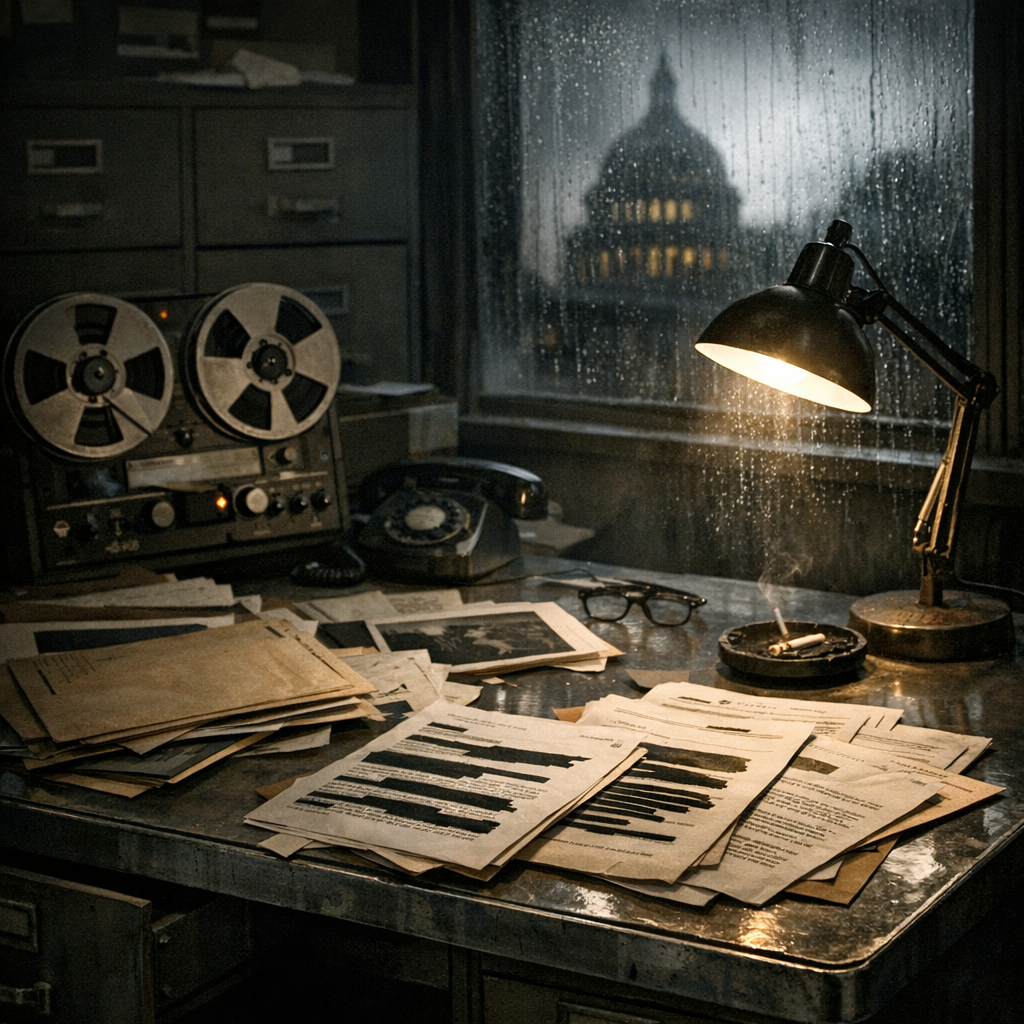
The file was never meant to calm anyone down. When old government records began confirming that U.S. intelligence figures had explored ways to remove foreign leaders, the phrase CIA assassination plots stopped sounding like pure paranoia and started feeling like a locked drawer that had finally been forced open. In dim hearing rooms and declassified pages, people saw something unsettling: some of the stories once treated as wild suspicion had roots in the real machinery of the Cold War.
That is exactly why this subject keeps expanding. Once a secret program becomes real, it becomes easy for people to wonder what else was hidden, what never made it into the files, and whether the same agency sits behind every famous political killing that still feels unresolved.
What Happened
The strongest foundation for this conspiracy story is not rumor. It is history. During the Cold War, U.S. officials and intelligence-linked actors were involved in serious discussions and operations aimed at foreign leaders seen as threats to American interests. The most famous examples include plots connected to Fidel Castro in Cuba, as well as controversies around Patrice Lumumba in the Congo and Rafael Trujillo in the Dominican Republic.
For years, many Americans had only fragments of these stories. Then investigations in the 1970s, especially the Church Committee, pulled some of that hidden history into public view. Those hearings were striking because they did not just repeat gossip. They showed that covert action had sometimes moved far beyond spying and into darker territory.
That human moment matters. Imagine being an ordinary person watching those revelations unfold on television or reading them in the newspaper. What had once sounded like the kind of thing only the most suspicious people would say was now appearing in official language. The shock was not just that plots had existed. It was that government power had come so close to private murder while the public knew almost nothing about it.
That does not mean the CIA carried out every killing later blamed on it. But it does mean the public learned a hard lesson: when institutions keep enough secrets for long enough, they create the exact conditions that conspiracy thinking feeds on.
Why People Believe It
People believe broad CIA assassination theories because the starting point is not imaginary. There really were covert operations, hidden partnerships, and plans that crossed moral and legal lines. Once that becomes part of the historical record, trust does not snap back easily.
Another reason is pattern recognition. Many major assassinations or suspicious deaths arrive with confusion, conflicting testimony, missing pieces, or delayed disclosures. When people already know intelligence agencies once operated in the shadows, they naturally begin connecting later events to that same hidden world.
The agency’s public image also plays a role. The CIA is built around secrecy. It recruits quietly, classifies heavily, and rarely explains itself in full. That creates an atmosphere where even a small unanswered question can feel like proof of something larger. It is the same reason stories about hidden political control remain powerful in posts like Deep State Explained: the more invisible a system seems, the easier it becomes to imagine it operating without limits.
Then there is the emotional logic. Assassinations are among the most traumatic events in politics. People do not like randomness in those moments. They want a design, a planner, a hidden hand. A lone extremist, a messy local crisis, or a chain of bad decisions can feel too small for a history-changing death. A covert plot feels darker, but it also feels more satisfying because it gives chaos a shape.
Claims vs Evidence
Claim: The CIA has secretly directed or influenced nearly every major political assassination that matters.
Evidence: There is no confirmed evidence for that sweeping idea. What the historical record supports is narrower and still serious: the agency was linked to specific Cold War-era plotting, including efforts involving foreign leaders in particular geopolitical contexts.
Claim: Declassified files prove the agency routinely removes anyone who threatens elite interests.
Evidence: Declassified records do prove that covert action sometimes included shocking assassination-related planning. However, they do not prove a universal system controlling every later death attached to the theory. The confirmed cases are real, but they are not a blank check for every accusation that followed.
Claim: Once the CIA was caught in a few plots, all disputed assassinations should be treated as intelligence operations by default.
Evidence: That is a leap. Past misconduct can justify scrutiny, but scrutiny is not the same as proof. Each case still has to stand on its own facts, timelines, documents, witnesses, and forensic record.
This is where the theory often grows. Real covert history becomes the launchpad for much larger stories. Documented operations against foreign leaders blur into claims about domestic assassinations, celebrity deaths, and any event where official answers feel incomplete. The subject expands because the original core is strong enough to keep suspicion alive.
There is also a media effect. Once one declassified revelation becomes public, articles, documentaries, podcasts, and forum threads tend to stack every dark episode together. Soon, proven plots, plausible allegations, and internet myth all appear side by side. That pileup makes it harder for readers to tell where the record ends and the imagination begins. A similar problem appears in debates over state secrecy and narrative control, including pieces like Operation Mockingbird, where confirmed history and later expansion often get tangled together.
Reality Check
The reality check is uncomfortable because both sides of the story contain something true. Skeptics are right to say many CIA assassination claims grow far beyond the evidence. Believers are right to say the agency’s real history gives the public valid reasons to distrust easy official reassurances.
What we do know is that U.S. intelligence agencies operated in a Cold War environment that rewarded secrecy, proxy action, and extreme measures. That produced genuine plots and genuine ethical failures. Official investigations later exposed enough of that world to permanently damage the idea that these fears were just fantasy.
What we do not know is equally important. There is no confirmed evidence that every major assassination mystery traces back to Langley. There is no public record proving one all-controlling hidden machine that scripts global politics through murder. In many later cases, the theory survives because the event was shocking, the record is incomplete, or the public simply does not trust the institutions involved.
The best way to approach this topic is to resist two easy mistakes. The first is pretending documented plots were minor or meaningless. They were not. The second is treating those plots as proof of every later suspicion. That shortcut can turn serious historical wrongdoing into a catch-all myth that explains too much and proves too little.
If anything, the deeper lesson is about secrecy itself. When governments hide enough from the public, even real disclosures arrive too late to rebuild confidence. People start assuming the worst not just because they are irrational, but because history taught them that some of the worst things were once denied.
Conclusion
CIA assassination plots are not powerful as a conspiracy topic because the entire theory is proven. They are powerful because part of it is. Declassified history confirms that intelligence-linked plotting against foreign leaders was not an invention. That fact alone changed the conversation forever.
But the larger claim—that the CIA stands behind every major political killing people still debate—goes beyond what the evidence currently supports. The honest conclusion is that this story lands in the middle ground: partly explained, still emotionally loaded, and permanently shaped by the damage real secrecy did to public trust.
That may be why the theory never fully disappears. Once a government admits it once considered the unthinkable, every later mystery arrives with a shadow already attached.
🔎 If this story stayed with you, the author suggests these real cases next:
- Operation Mockingbird: Did the CIA Really Shape the News?
- Deep State Explained: Hidden Ruling Network or Just the Machinery of Government?
- Shadow Governments: Who Really Pulls the Strings Behind Power?
Explore more Political Conspiracies stories here: