
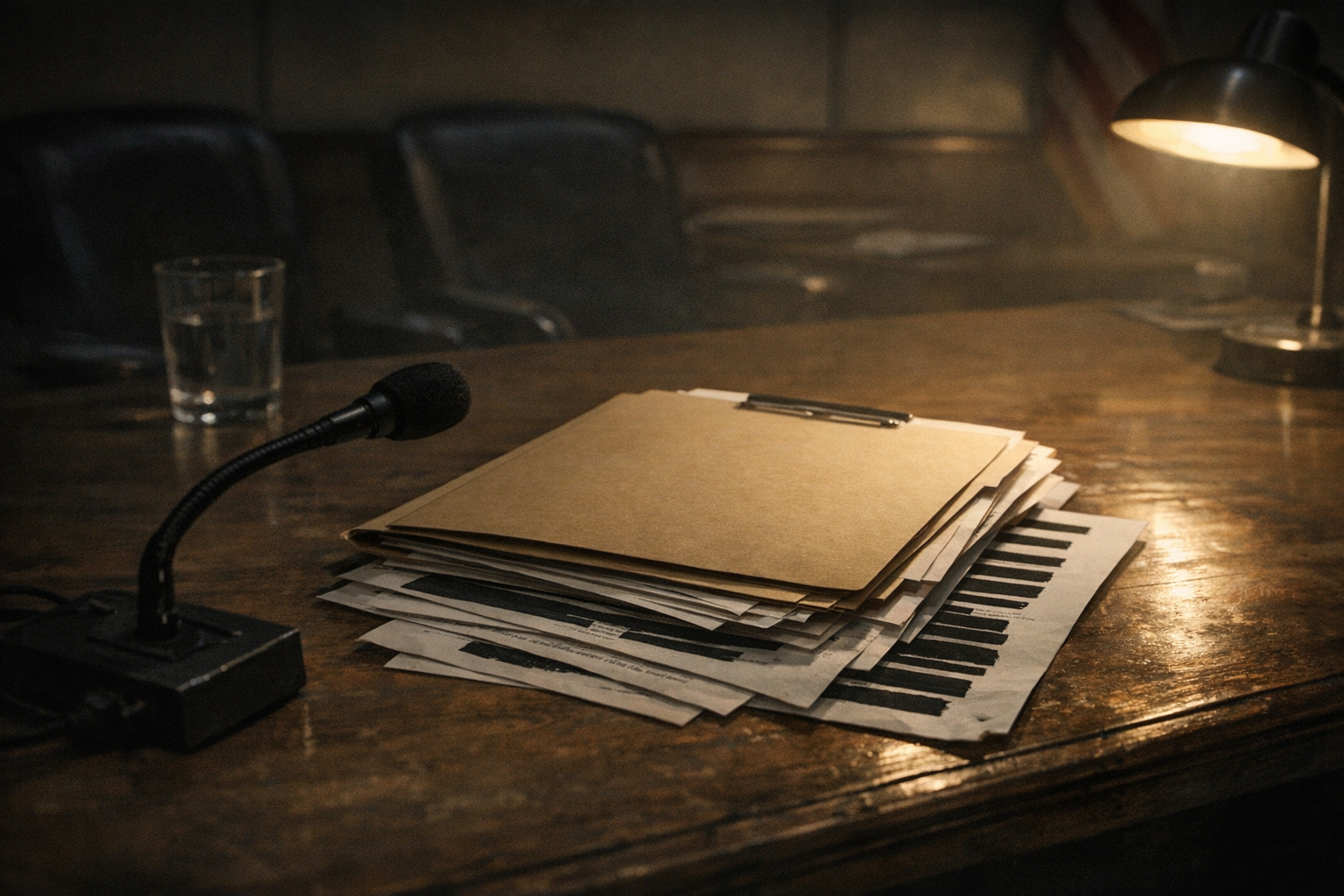
The public keeps hearing the same strange promise: insiders say they used protected channels, briefed the right people, and handed over serious claims behind closed doors — yet the evidence itself never seems to step into daylight. In hearing rooms lit by flat government bulbs and in complaint files marked by blacked-out lines, the mystery is no longer just what was seen. It is whether the system for reporting UAP secrets is built to protect truth, contain it, or quietly lose it in process.
UAP whistleblower laws are the legal and procedural rules that let government or defense insiders report concerns about hidden programs, misconduct, or retaliation through protected channels. Supporters of UFO disclosure often point to these laws as proof that something major is moving behind the scenes. The more grounded view is that these rules can protect a reporting process, but they do not automatically turn a protected allegation into public evidence.
What Happened
The modern UAP debate changed when the story moved out of late-night radio and into paperwork. Instead of hearing only about sightings, the public started hearing about inspectors general, classified briefings, secure testimony, and formal retaliation complaints. That shift made the mystery feel more official — and a lot more believable.
This article’s angle is simple: the real story is not the whistleblower claims themselves, but the legal and procedural architecture around them. The system matters because many readers now assume that if someone is allowed to report through protected channels, the government must already know the claim is true. That is not how these laws work.
In broad terms, intelligence and defense personnel do have ways to raise concerns through internal oversight systems. They may report suspected wrongdoing, abuse, or reprisal to inspectors general or, under specific rules, to congressional oversight bodies. Those systems exist because some parts of government really are hidden, and ordinary public reporting is not always possible when classified material is involved.
That is the key human moment inside this story. Picture a cleared official walking into a secure room with a lawyer, a stack of notes, and a problem they believe cannot be raised in public. The fluorescent lights hum. The door closes. They are not there to prove a case to the internet. They are there to start a formal process inside a system that runs on access, permissions, and chain of command.
From the outside, that scene sounds dramatic. It also sounds like progress. But the process is narrower than it looks. Protected reporting channels are designed to let a complaint be received without immediate punishment. They are not designed to guarantee that the complaint will be confirmed, declassified, or shared with the public in full.
That gap matters in UAP cases more than almost anywhere else. Once a witness says, “I gave classified testimony,” many people hear that as a near-confirmation. In reality, it often means only that the person used an authorized route to make a claim inside a secure environment. The claim may be important, sincere, and worth review — and still remain unproven.
That is why this topic connects naturally to David Grusch UFO Claims: What Was Alleged, What Was Verified?. Much of the public confusion comes from treating access to process as if it were the same thing as access to proof.
Why People Believe It
People believe UAP whistleblower laws are a breakthrough because the rules sound serious. They involve officials, oversight channels, legal terms, and the idea of protected disclosures. That language feels different from a rumor. It feels like the machine itself is finally cracking open.
There is also a very understandable instinct behind the belief. If the government has special rules for protected reporting, then something sensitive must exist to report. That part is true. Classified systems, compartmented programs, and internal oversight mechanisms are real. But that reality is broader than the UFO question. A reporting channel can exist because secrecy exists, not because a specific alien claim has already been validated.
Another reason belief grows is that legal language can make uncertainty look stronger than it is. Terms like “credible,” “urgent,” “protected,” or “classified testimony” sound close to a verdict. In ordinary speech, people hear those words and assume a trusted authority has looked at the evidence and quietly agreed. Often, that assumption goes too far.
The system can also feel persuasive because it mirrors how real whistleblower stories work in other fields. When people hear about retaliation, fear of reprisal, or closed-door disclosures, they think of genuine scandals where insiders were punished for telling the truth. That memory makes the UAP version emotionally sticky even when the evidence chain is incomplete.
And then there is the proof-gap problem. The public keeps hearing that testimony was given in secure settings, while the most dramatic details stay sealed. That creates a vacuum, and vacuums fill fast. Posts like UFO Insider Testimony: Why Credible Witnesses Still Leave a Proof Gap matter because they explain the part many people miss: credible testimony can still leave the central claim unresolved.
Finally, UAP whistleblower laws fit the broader secrecy storyline already running through the cluster. If readers have already absorbed stories about hidden programs, compartmentalization, and disclosure fights, then a law-based explainer does not feel like a technical side note. It feels like the missing instruction manual for how the hidden world supposedly works.
Claims vs Evidence
Claim: UAP whistleblower laws prove insiders can safely reveal the truth about hidden UFO programs.
What the evidence supports: There are legal and procedural pathways that can allow certain government or contractor personnel to report concerns, including suspected misconduct or retaliation, through authorized channels. Oversight bodies can receive those concerns. Lawmakers and inspectors general can review them, ask follow-up questions, and sometimes take them seriously enough to pursue more information.
What that does not prove: that the underlying UAP claim is true, that the hidden program exists as described, or that the reported information will ever become public in a form readers can independently judge.
This is the misunderstood detail at the center of the whole debate: protected disclosure is about route, not verdict. It tells you how a claim entered the system. It does not tell you what the system ultimately found.
There is a second distinction that matters just as much. Some protections focus on retaliation. In plain English, that means a person may be shielded, at least on paper, from certain punishments for making a lawful report. But even if retaliation is documented, that still does not settle whether every underlying allegation was correct. A person can be mistreated and still be wrong, partly wrong, or relying on secondhand information.
Classification limits are another major source of confusion. When a witness says they can provide more detail only in a secure setting, supporters often take that as a sign that explosive evidence exists. Sometimes it may. But classification tells us something is restricted, not whether it confirms the theory the public most wants to hear. The hidden material could strengthen the claim, weaken it, complicate it, or show that the witness was relaying fragments rather than a complete picture.
The Schumer-style disclosure push widened that confusion. For many readers, laws and amendments aimed at records review sounded like indirect admission that hidden UAP secrets must be real. But as Schumer UAP Disclosure Act: Transparency Push or Proof Hidden Programs Exist? makes clear, a transparency mechanism is not the same thing as confirmed extraordinary evidence.
There is also a built-in contradiction. Believers often describe an all-powerful secrecy machine capable of hiding programs for decades. Yet the same machine repeatedly allows hearings, leaks, legal filings, interviews, legislative fights, and a steady flow of insider narratives. That does not disprove a cover-up. It does suggest the architecture is more bureaucratic and uneven than the clean myth of total silence.
And that brings us to the deeper evidence question. Most UAP whistleblower stories reach the public as layers of reporting about reports. One person says they were told something. Another says classified material exists. A lawmaker says they heard concerning testimony. Each step can be serious. But each step also moves the public farther from direct, reviewable proof.
Reality Check
The strongest reality check is also the least dramatic one: UAP whistleblower laws are real, but their practical meaning is narrower than the public story built around them.
They can matter in at least three ways. First, they can give insiders a lawful route to report concerns. Second, they can create at least some protection against reprisals for using that route. Third, they can help oversight bodies understand whether something improper is happening inside a classified system. All of that is important. None of it is the same as public confirmation of a hidden non-human technology program.
In fact, the structure almost guarantees frustration. The more sensitive the alleged information is, the more likely it stays confined to secure settings. That means the public hears that testimony happened, but usually cannot inspect the full evidence chain. For people who already suspect concealment, the silence feels like confirmation. For skeptics, it feels like another story resting on inaccessible material. The law does not resolve that tension. It manages it.
That is why the phrase “protected testimony” needs to be handled carefully. Protected does not mean proven. It means the testimony was, or was meant to be, delivered through a channel the system recognizes. That is a procedural fact, not an evidentiary conclusion.
The same caution applies to inspector general involvement. Review by an oversight office can signal that a matter was serious enough to examine. It does not automatically mean the most dramatic public interpretation was accepted. Oversight bodies often focus on whether procedures were followed, whether reprisal occurred, and whether a complaint was handled properly. Those are different questions from whether alien craft were recovered.
What we do know is enough to explain why this theory has staying power. Secrecy is real. Clearance systems are real. Compartmented access is real. Retaliation fears can be real too. When those facts mix with extraordinary UAP claims, the result is a story that feels both hidden and official — the perfect fuel for lasting belief.
But the logical standard should stay firm. If the question is whether whistleblower laws exist, the answer is yes. If the question is whether those laws let insiders report sensitive UAP concerns, the answer is also yes, at least in limited and structured ways. If the question is whether that process proves hidden UFO programs exist, the answer is no. Not by itself.
That is the difference between procedure and proof, and it is the difference this debate keeps blurring.
Conclusion
UAP whistleblower laws sit at the center of the modern disclosure story because they make the mystery feel organized. They replace the image of a lone witness shouting into the dark with something more compelling: a person entering a protected system, making a formal allegation, and forcing hidden institutions to respond.
That image is powerful for a reason. It suggests there are rules for handling the truth. But rules for reporting are not the same thing as evidence of what was reported. The architecture can be real even when the conclusion remains unsettled.
So if readers want a clear answer, it is this: UAP whistleblower laws may protect a process, and that process may reveal whether serious concerns deserve oversight. What it does not do is magically convert closed-door claims into public proof. In the UAP world, that gap is where belief keeps growing — and where careful thinking still matters most.
🔎 If this story stayed with you, the author suggests these real cases next:
- David Grusch UFO Claims: What Was Alleged, What Was Verified?
- UFO Insider Testimony: Why Credible Witnesses Still Leave a Proof Gap
- Schumer UAP Disclosure Act: Transparency Push or Proof Hidden Programs Exist?
Explore more Alien & UFO Theories stories here: