
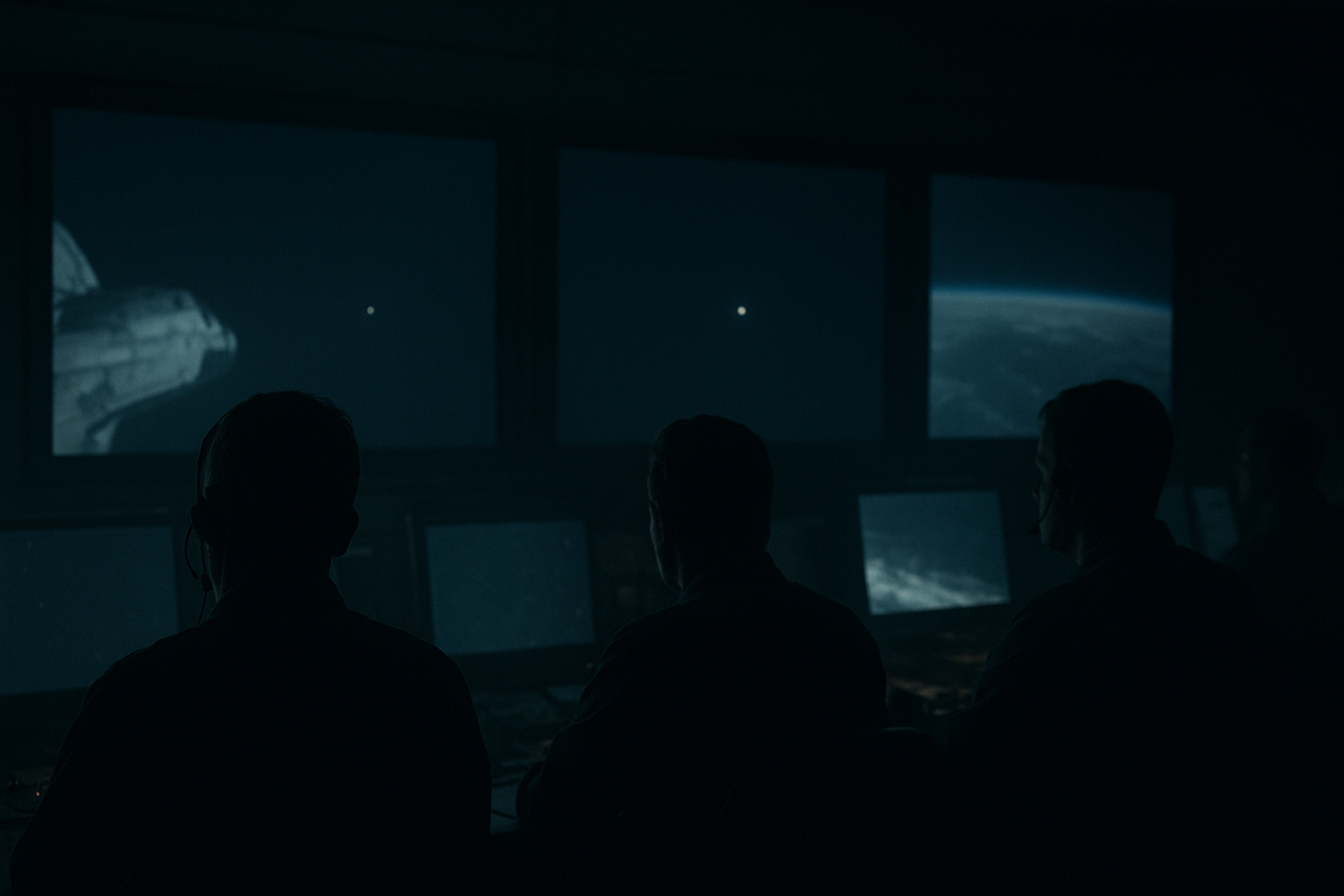
The **NASA alien cover-up** theory thrives in moments that feel almost too strange to be ordinary: a grainy object drifting across a live feed, a clipped transmission, a camera angle that suddenly cuts away. To people already suspicious of secrecy in space, those scenes do not look like technical noise. They look like a door closing just as the public gets close enough to peek through it.
That tension is what gave this story such staying power. NASA is one of the most respected science agencies in the world, but it also works behind restricted systems, mission rules, military partnerships, and controlled public briefings. When an institution built on discovery also controls what the world gets to see, even normal silence can start to feel like hidden knowledge.
What Happened
Claims that NASA is hiding alien contact have been around for decades. They usually rise after a specific moment that looks mysterious on screen or sounds suspicious in a quote. Over time, these moments get repeated in documentaries, old forum threads, late-night radio shows, and video compilations until they begin to feel like parts of one giant secret.
One of the most common examples comes from shuttle-era footage, especially videos that supporters say show unusual objects moving near spacecraft. In some clips, bright dots appear to change direction, pulse, or streak away after a flash. To believers, that movement looks intelligent. To skeptics, it looks like ordinary debris, ice particles, lens effects, or motion caused by the camera and the shuttle itself.
Another source of suspicion came from alleged live-feed interruptions. Viewers have long claimed that NASA cut transmissions whenever something unexplained entered the frame. In the age of analog broadcasts and partial archives, these moments became easy to mythologize. A missing segment, a switched camera, or a sudden end to a feed could quickly turn into proof that officials saw something they did not want the public to study too closely.
Then there are the astronaut quotes. For years, supposed statements from astronauts have circulated online as if they were direct admissions of contact or hidden knowledge. Some are taken out of context. Some are paraphrased so loosely that the original meaning disappears. A few involve astronauts saying they saw unusual things in space without claiming those things were alien craft at all.
There is also a powerful human moment behind the theory. Imagine a teenager staying up late to watch a replay of shuttle footage on a glowing computer screen, pausing every few seconds, convinced that one bright object in the darkness is the one moment where the truth slipped through. That experience matters because it turns the theory from an abstract debate into a personal discovery story. People do not just hear the claim. They feel like they saw it for themselves.
Why People Believe It
The biggest reason this theory survives is simple: NASA operates in a world most people cannot personally verify. Very few people understand every detail of orbital footage, mission protocols, radio chatter, or image compression. When something looks strange in that environment, the public often has to trust experts to explain it. And if trust is already weak, official explanations can sound like a cover story instead of a clarification.
NASA also inherited decades of space-age secrecy. During the Cold War, space missions were tied to national prestige, defense interests, classified technology, and intense public messaging. Even when a mission had nothing to do with aliens, the culture around it trained people to expect filtering, withholding, and controlled information. That history makes alien-cover-up claims feel emotionally believable even when hard proof is missing.
Pop culture did the rest. Movies, TV specials, tabloid headlines, and internet videos turned NASA into the perfect stage for hidden-contact stories. A secret base on Earth is one thing. A government space agency with access to the Moon, Mars, deep-space telescopes, and live orbital feeds feels even more dramatic. If anyone were first to see something not from Earth, many people assume it would be NASA.
The theory also feeds on a real pattern: institutions sometimes do hide things. Not necessarily aliens, but mistakes, embarrassing moments, sensitive data, and internal disagreements. Once people know that an organization has reasons to manage information, they may jump from “they withhold some things” to “they are hiding the biggest truth of all.” That leap is where conspiracy thinking often takes hold.
You can see the same dynamic in stories about Area 51 alien rumors and the older panic around the Roswell UFO crash. Real secrecy becomes the fuel. Speculation decides where the fire spreads.
Claims vs Evidence
Supporters of the NASA alien-contact theory usually make several core claims. First, they argue that strange objects in mission footage show intelligent craft moving in ways normal debris cannot. Second, they claim interrupted feeds prove NASA shut down public access when something extraordinary appeared. Third, they point to astronaut comments as insider hints that life beyond Earth has already been seen. Finally, some go further and argue that NASA is working with other agencies in a long-term disclosure suppression effort.
There is no confirmed evidence that NASA has publicly documented alien contact and then hidden it from the world. That line matters. The theory is not built on one verified leak, one authenticated memo, or one direct confession backed by records. It is built on clusters of ambiguous visuals, disputed interpretations, and long-running suspicion.
What we do know is that many strange-looking objects in space footage have ordinary explanations. Small particles close to a camera can appear enormous against the black background of space. Thruster firings can change the path of floating debris in ways that look intentional when the full context is missing. Compression artifacts, reflections, and incomplete clips can make a mundane scene feel much more dramatic than it really was.
What we also know is that quote culture online is messy. A famous astronaut may speak about the possibility of life elsewhere in the universe, and by the time the line is reposted across videos and forums, it can sound like a secret acknowledgment of visitation. In other cases, a quote attached to an astronaut is either misremembered, misattributed, or stripped of the careful wording that originally made it less sensational.
That does not mean every question is foolish. Some footage remains visually odd. Some NASA material has been poorly explained to the public. Some clips are still passed around precisely because they do not produce an instant, satisfying answer. But “unexplained” is not the same as “alien,” and it is certainly not the same as “covered up by NASA.”
Reality Check
This is where the story becomes less cinematic and more useful. The strongest version of the theory is not that NASA has seen a few odd things. That would be easy to imagine. The stronger claim is that NASA possesses clear evidence of alien contact and has successfully hidden it across decades of missions, staff changes, international cooperation, media scrutiny, and digital leaks.
That is a much bigger claim, and it demands much stronger evidence than blurry clips or suspicious timing. A real cover-up on that scale would likely leave behind more than internet arguments. It would produce consistent records, insider documents, verifiable testimony, or material that experts across fields could examine independently.
Instead, most of the story survives because the evidence is incomplete. Paradoxically, that weakness often helps the theory. A missing angle or unclear image gives believers room to imagine the hidden piece. Once people decide the truth is being suppressed, every gap starts to look intentional.
There is also a simpler explanation for why NASA seems central in these stories: it is visually powerful. Space is already mysterious. Cameras in orbit produce images that most people cannot interpret on sight. That makes NASA footage perfect raw material for conspiracy narratives. A snowflake near a lens can become a ship. A routine cut can become censorship. An uncertain comment can become a confession.
So where does that leave the question? Based on the public record, the theory is best understood as a myth that grew in the shadow of real institutional secrecy, real public fascination, and genuinely strange-looking material that rarely came with enough context to stop speculation cold. That does not prove NASA has explained every odd clip perfectly. It does mean the leap from mystery to hidden alien contact is far bigger than the evidence supports.
Conclusion
The NASA alien-cover-up story remains compelling because it sits at the crossroads of wonder and distrust. People want space agencies to discover something extraordinary, but they also fear those same agencies would lock the truth behind security doors if the discovery were too disruptive.
For now, the public evidence does not show confirmed alien contact hidden by NASA. What it does show is a pattern that appears again and again in conspiracy culture: real secrecy, unclear imagery, and missing context can create a story that feels stronger than the proof behind it.
That is why this theory has lasted so long. It is not only about aliens. It is about who controls the view when the rest of us are staring into the dark.
🔎 If this story stayed with you, the author suggests these real cases next:
- Roswell UFO Crash: The desert wreckage that turned rumor into a national mystery
- Government UFO Programs: The paper trail that kept the question alive inside official offices
- Area 51 Alien Rumors: Why one locked desert base still feels like forbidden ground
Explore more Alien & UFO Theories stories here: