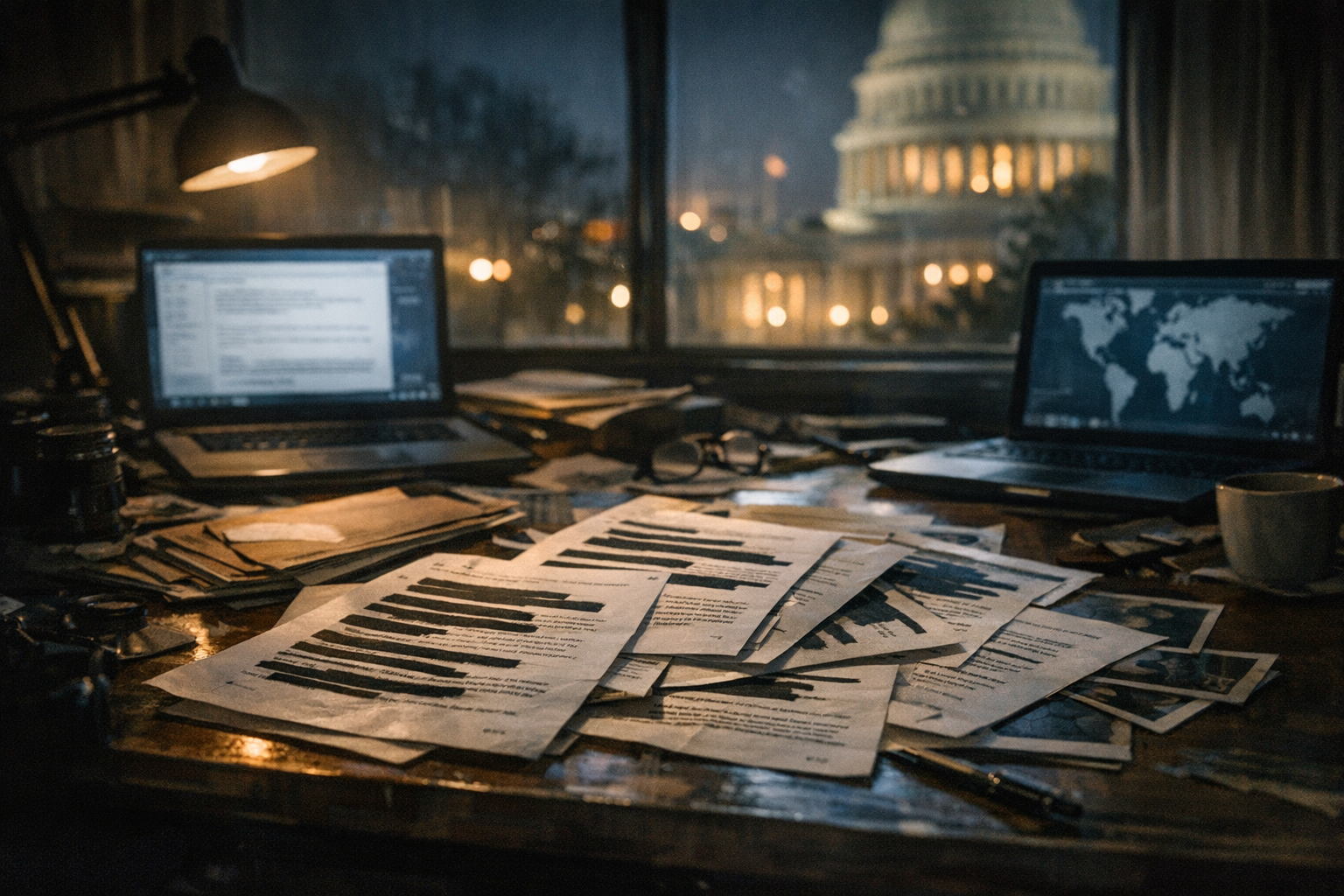
The files appeared behind a glow of blue-white screens, the kind of secret material most people are never supposed to touch. Cables, war logs, diplomatic messages, and private government language suddenly sat in public view, and for a moment the WikiLeaks revelations felt like a door had opened into a hidden room of power.
That is why WikiLeaks still carries such a strange reputation. To some people, it proved transparency could break through state secrecy. To others, it became something more dangerous: a machine that took real leaked information and trained millions of readers to see every fragment as proof of a much larger unseen system.
What Happened
WikiLeaks was founded in 2006 as a publishing platform built around leaked documents. Its public image was simple and powerful: insiders would pass along hidden records, and the site would publish them so the public could see what powerful institutions were doing behind closed doors.
🔎 Related Investigation:
That idea hit with unusual force because it arrived at the right time. The internet had already made people suspicious of official narratives, and social media was teaching audiences to distrust gatekeepers. Then WikiLeaks began releasing material that looked exactly like the kind of evidence many people believed was always being hidden from them.
Some of its most famous releases involved U.S. military and diplomatic material. The “Collateral Murder” video, published in 2010, showed a deadly U.S. helicopter attack in Baghdad and immediately became one of the most discussed wartime leaks of the era. That same period brought the Afghan War Logs, the Iraq War Logs, and huge collections of U.S. diplomatic cables. These were not rumors. They were real records with real institutional consequences.
Picture the moment from an ordinary reader’s side. A person opens a laptop late at night, clicks into a database of government cables, and scrolls through language never meant for public eyes. There are references to deals, private assessments, ugly war details, and the blunt internal voice of power. Even before someone fully understands what they are reading, the emotional message lands: they hid this, and now we can finally see it.
That emotional force is central to the story. WikiLeaks did expose genuine information. It helped reveal military realities, diplomatic behavior, and the difference between public messaging and private policy language. But it also created a new habit of reading power through leak culture, where secrecy itself became evidence that a bigger hidden system must be operating in the background.
The later political phase made that even stronger. During the 2016 U.S. election cycle, WikiLeaks released Democratic National Committee emails and material tied to John Podesta. Those releases landed inside an already overheated political environment filled with distrust, hacking accusations, media warfare, and intense partisan suspicion. The leaks were real. But the interpretations built around them quickly grew much larger than the documents themselves.
Why People Believe It
People believe larger conspiracy claims around WikiLeaks because the platform gave them something many theories never get: authentic hidden material. Once a person sees one real secret exposed, it becomes easier to believe the next missing piece must also exist somewhere just out of view.
🔎 Related Investigation:
WikiLeaks also changed the emotional rhythm of political suspicion. Instead of hearing that officials might be hiding something, readers could stare at a document dump and feel like they were personally uncovering it. That experience is powerful. It feels less like opinion and more like access.
Another reason the idea spread is that leaked material often arrives without the kind of context ordinary readers need. A cable can be candid without proving a plot. An internal email can be embarrassing without proving coordinated hidden rule. A classified report can reveal secrecy without confirming every theory attached to it. But when readers encounter fragments without full institutional background, they often fill the gaps with motive.
This is where WikiLeaks overlaps naturally with other political stories on the site. Leaks can make broader ideas about the deep state feel more concrete, even when the documents do not actually prove a hidden ruling network. They can also reinforce suspicions about media shaping and narrative management, themes that appear in Operation Mockingbird.
The internet amplified all of this. Dumps of real documents moved alongside edited screenshots, breathless threads, bad-faith interpretations, and outright false claims. A reader no longer had to separate archive from rumor in a calm setting. Everything arrived at once, carrying the same emotional signal: you were not told the whole truth.
That mix is why WikiLeaks became more than a leak site in the public imagination. It turned into a symbol. For supporters, it symbolized resistance to secrecy. For critics, it symbolized selective disclosure, political manipulation, and the dangerous illusion that raw information automatically explains itself.
Claims vs Evidence
Claim: WikiLeaks proved governments and political elites secretly coordinate far more than the public realizes.
Evidence: WikiLeaks did reveal real secrecy, private assessments, and hidden institutional behavior. But most released documents showed a mix of bureaucracy, power politics, candid internal language, and occasional misconduct rather than a single unified hidden command system.
Claim: Every major conspiracy theory attached to a leak gains credibility because the source material is authentic.
Evidence: Authenticity matters, but it does not solve interpretation. A real email or cable can be misread, quoted out of context, or stretched into a theory much larger than the text supports.
Claim: WikiLeaks functioned as a neutral transparency engine.
Evidence: The record is more complicated. The organization published material that clearly mattered to the public, but critics have long argued that selection, timing, source handling, and political context shaped how the leaks affected public debate. That does not erase the reality of the leaks. It does mean transparency was never a perfectly clean or apolitical process.
Claim: The 2016 releases confirmed a hidden system rigging democratic outcomes from behind the scenes.
Evidence: The released emails did expose internal party behavior and strategic thinking that many people found cynical or unfair. But that is different from proving a total hidden control structure running every part of political life. The leap from damaging internal conduct to all-encompassing conspiracy is much larger than many viral interpretations admitted.
Claim: If officials fear leaks, the leaks must contain the whole truth.
Evidence: Officials may fear leaks for many reasons, including embarrassment, operational risk, diplomatic fallout, damage to sources, or loss of message control. Fear of publication confirms sensitivity. It does not automatically confirm the biggest theory built from that sensitivity.
What the evidence does show is important enough on its own. Hidden records can reveal misconduct, contradiction, and private behavior that the public deserves to understand. What the evidence does not show is that every leak should be read as a complete map of a larger concealed machine.
Reality Check
The reality check is that WikiLeaks occupies an uncomfortable middle ground. It cannot be dismissed as fantasy because many of its releases were genuine and important. It also cannot be treated as a universal decoder ring for political conspiracy because raw disclosures do not interpret themselves.
That matters more than it sounds. In conspiracy culture, a real fragment often gets promoted into a total explanation. A private cable becomes proof of a hidden regime. A candid email becomes proof of coordinated rule. A classified archive becomes proof that every denied suspicion was right all along. But real documents are usually messier than that. They reveal systems made of ego, bureaucracy, secrecy, incompetence, ambition, and selective truth. Messy systems can still do harm. They just do not always match the cleaner plots people prefer.
WikiLeaks also taught the public a habit that still shapes politics now: distrust the official story, hunt for hidden records, and assume the most important truth is being kept just offstage. Sometimes that instinct is healthy. History gives plenty of reasons not to trust institutions blindly. But when that instinct hardens into a rule, readers stop investigating and start projecting.
So the clearest conclusion is not that WikiLeaks proved every large conspiracy. It is that WikiLeaks proved something narrower and still significant: states and political organizations keep secrets, private language often differs sharply from public messaging, and genuine disclosures can reshape how millions of people understand power. The danger begins when that real lesson gets stretched into total certainty about claims the documents never fully support.
Conclusion
WikiLeaks changed political conspiracy culture because it put hidden material into ordinary hands. That was a real shift. It showed that secrecy was not just an abstract fear. Sometimes it had names, dates, cables, and files attached.
But transparency did not automatically produce clarity. In many cases, it produced a new kind of fog, where truth, interpretation, suspicion, and agenda all moved together. That is why the site remains so divisive. It exposed real things while also training people to overread incomplete evidence.
The most honest answer is that WikiLeaks was both a transparency breakthrough and conspiracy fuel. It revealed hidden realities. It also helped create the conditions where fragments of truth could be assembled into stories much larger than the record could safely hold.
🔎 If this story stayed with you, the author suggests these real cases next:
- Deep State Explained: Hidden Ruling Network or Just the Machinery of Government?
- Operation Mockingbird: Did the CIA Really Shape the News?
- Mass Surveillance State: How Much Does the Government Really See?
Explore more Political Conspiracies stories here: