
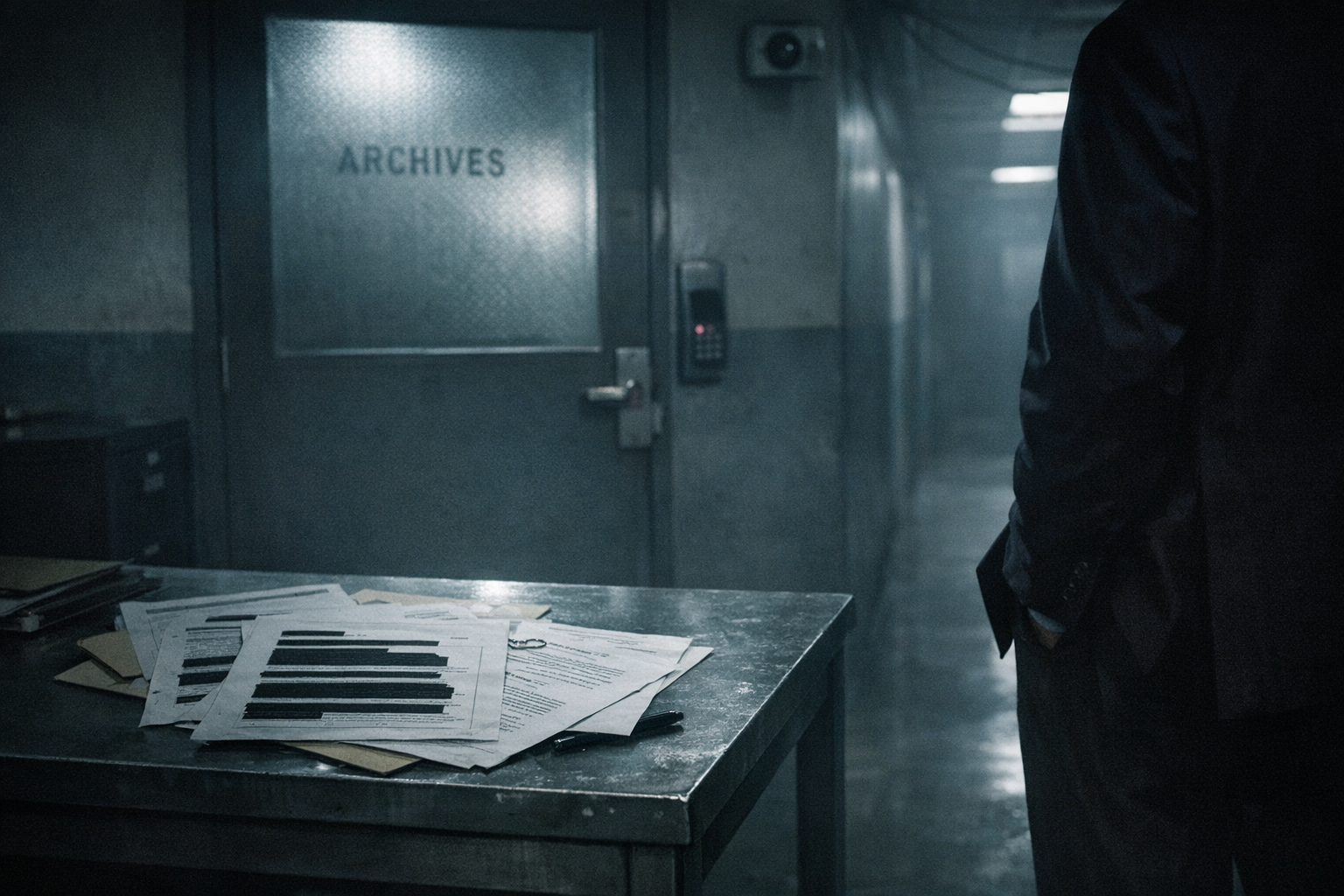
The door was supposed to stay closed. Behind it were the rooms with no windows, the folders stamped in black ink, and the kinds of decisions ordinary citizens were never meant to see. That hidden world is where the idea of intelligence agency power begins—inside locked offices, classified briefings, and quiet operations that can shape history without ever appearing on a ballot.
What Happened
Modern intelligence agencies were built to gather secrets, stop foreign threats, and give political leaders information before a crisis exploded. In theory, that mission sounds simple. In practice, it created a part of government that works in the dark, answers only to a small number of people, and often keeps even major decisions hidden for decades.
That secrecy is not imagined. It is documented. In the United States alone, later investigations revealed surveillance programs, covert propaganda efforts, foreign coups, domestic monitoring, and plots so reckless they still sound fictional when people first hear them. Once those operations were exposed, many people stopped asking whether governments keep dangerous secrets. They started asking how much remains buried.
One of the strongest reasons this theory survives is that real history gave it fuel. During the Cold War, intelligence agencies were handed huge responsibilities and broad freedom. Fear of communism, nuclear war, and infiltration made leaders more willing to approve aggressive tactics. Oversight was often weak. The public knew very little. Even some elected officials knew only fragments.
Picture the scene from an ordinary citizen’s perspective in the 1960s or 1970s. You turn on the evening news and hear that your government is defending freedom overseas. Years later, you learn that some of those same institutions were running covert influence campaigns, monitoring activists, or backing operations in foreign countries without full public debate. That gap between the public story and the hidden record is where distrust takes root.
The conspiracy version of this story says intelligence agencies do not just collect information. It says they quietly steer elected governments, shape media narratives, protect permanent interests, and continue operating regardless of which party wins power. In that version, presidents and prime ministers come and go, but the security machine remains in place, pulling key levers behind the curtain.
Why People Believe It
People believe this because secrecy changes how power feels. If a government program is public, citizens can argue with it, vote against it, challenge it in court, and read reporting about it. But when something happens under classification, the public often sees only the outcome, never the process. That missing middle invites suspicion.
There is also a simple human pattern at work: when institutions hide true things, people become more willing to believe unproven things. Declassified records about surveillance, covert wars, and propaganda make the public more open to the idea that hidden power still exists today. Sometimes that suspicion is healthy. Sometimes it grows beyond the evidence.
Another reason is that intelligence agencies are designed to be hard to see. Their budgets can be partly hidden. Their legal authorities can be complicated. Their partnerships with private companies, military units, and foreign governments can be indirect. To an outsider, that looks less like normal bureaucracy and more like an invisible web.
Popular culture adds more force. Films, thrillers, documentaries, and online investigations all keep returning to the same image: a government inside the government. That image sticks because it is dramatic, but also because small pieces of it have turned out to be real before. Articles about the mass surveillance state or allegations linked to Operation Mockingbird do not prove every hidden-power theory. But they do remind readers that secrecy and influence have crossed paths before.
Then there is the emotional side. Large political events often feel messy and unsatisfying. Elections swing, policies reverse, and scandals break, yet many core systems seem untouched. For some people, the idea of hidden agency control provides a cleaner explanation than the more boring truth that huge institutions often move slowly, protect themselves, and outlast individual leaders.
Claims vs Evidence
Claim: Intelligence agencies secretly run the government, and elected leaders are mostly figureheads.
Evidence: There is real evidence that intelligence services can influence policy, control information flows, and shape what decision-makers know. Briefings matter. Secret findings matter. Bureaucracies can resist leaders they dislike. But evidence for total control is much weaker. Most governments are full of competing offices, rival agendas, leaks, legal limits, and political pressure. Hidden influence exists. Complete hidden rule is much harder to prove.
Claim: Intelligence agencies manufacture public opinion through media manipulation on a massive scale.
Evidence: History shows that propaganda and influence campaigns have existed. Some agencies cultivated journalists, pushed narratives abroad, or managed information in ways the public did not fully understand at the time. That much is supported by reporting and declassified material. The leap comes when people assume every major news event is directed by intelligence professionals. That claim usually outruns the available facts.
Claim: When major political events do not make sense, intelligence agencies must be behind them.
Evidence: Sometimes secrecy really is part of the explanation. But confusion by itself is not proof of covert control. Governments are often disorganized. Leaders make bad calls. Agencies fight each other. Systems fail. Real politics can look suspicious even when no master plan exists.
Claim: The same hidden network continues across decades, protecting itself no matter what.
Evidence: There is some reason people find this plausible. Institutions do survive leadership changes. Career officials remain after administrations leave. Classified programs can continue with little public attention. Still, that does not automatically mean there is one unified secret cabal. It may mean entrenched bureaucracy, national security habit, and political fear are powerful enough on their own.
Reality Check
This is where the story gets more interesting—and more uncomfortable. The strongest version of the conspiracy is usually too neat. It imagines a disciplined hidden machine that controls history with precision. Reality tends to be rougher than that.
Intelligence agencies do hold unusual power. They collect secrets, influence policy, and sometimes act in ways the public would reject if fully informed. History proves that. That is not paranoia. It is one reason oversight committees, inspectors general, whistleblowers, courts, and investigative reporters matter so much.
But those same agencies are not all-powerful. They make mistakes. They miss threats. They get caught. They leak. They disagree internally. They answer to budgets, law, rival agencies, politics, and public backlash. If they were a flawless hidden government, so many operations would not later surface in hearings, lawsuits, memoirs, and declassified files.
The more grounded conclusion is this: intelligence agencies may not secretly control everything, but they can influence far more than most citizens realize. That influence becomes dangerous when secrecy expands faster than oversight. The real risk is not always a movie-style puppet master. Sometimes it is a permanent security culture that grows comfortable operating beyond public understanding.
That distinction matters. If every event gets blamed on an invisible mastermind, serious scrutiny gets weaker, not stronger. People stop asking specific questions. They stop following documents, timelines, funding streams, and legal authority. They drift from investigation into mythology.
A better approach is sharper and less glamorous. Ask what was classified. Ask who approved the operation. Ask what oversight existed. Ask whether the public was misled. Ask whether the evidence points to covert influence, bureaucratic self-protection, or ordinary political failure. Those questions do more work than a thousand dramatic claims.
Conclusion
The theory of hidden government power survives because it rests on a real foundation: secret agencies have done secretive, sometimes abusive things, and the public usually learns the full story late. That history makes people suspicious for good reason.
At the same time, suspicion is not the same as proof. The evidence supports a darker but more believable picture. Intelligence agencies are not necessarily all-powerful puppet masters, yet they do operate in spaces where accountability is thin and public visibility is low. That alone is enough to shape politics in ways most people never see.
So the question is not whether intelligence agencies have hidden power. They clearly do. The harder question is how much, under what limits, and who is brave enough to keep checking the locked door.
🔎 If this story stayed with you, the author suggests these real cases next:
- Deep State Explained: Hidden Ruling Network or Just the Machinery of Government?
- CIA Assassination Plots: What Was Declassified – and What Got Added Later?
- False Flag Operations: How Real Deception Fuels Bigger Political Theories
Explore more Political Conspiracies stories here: