
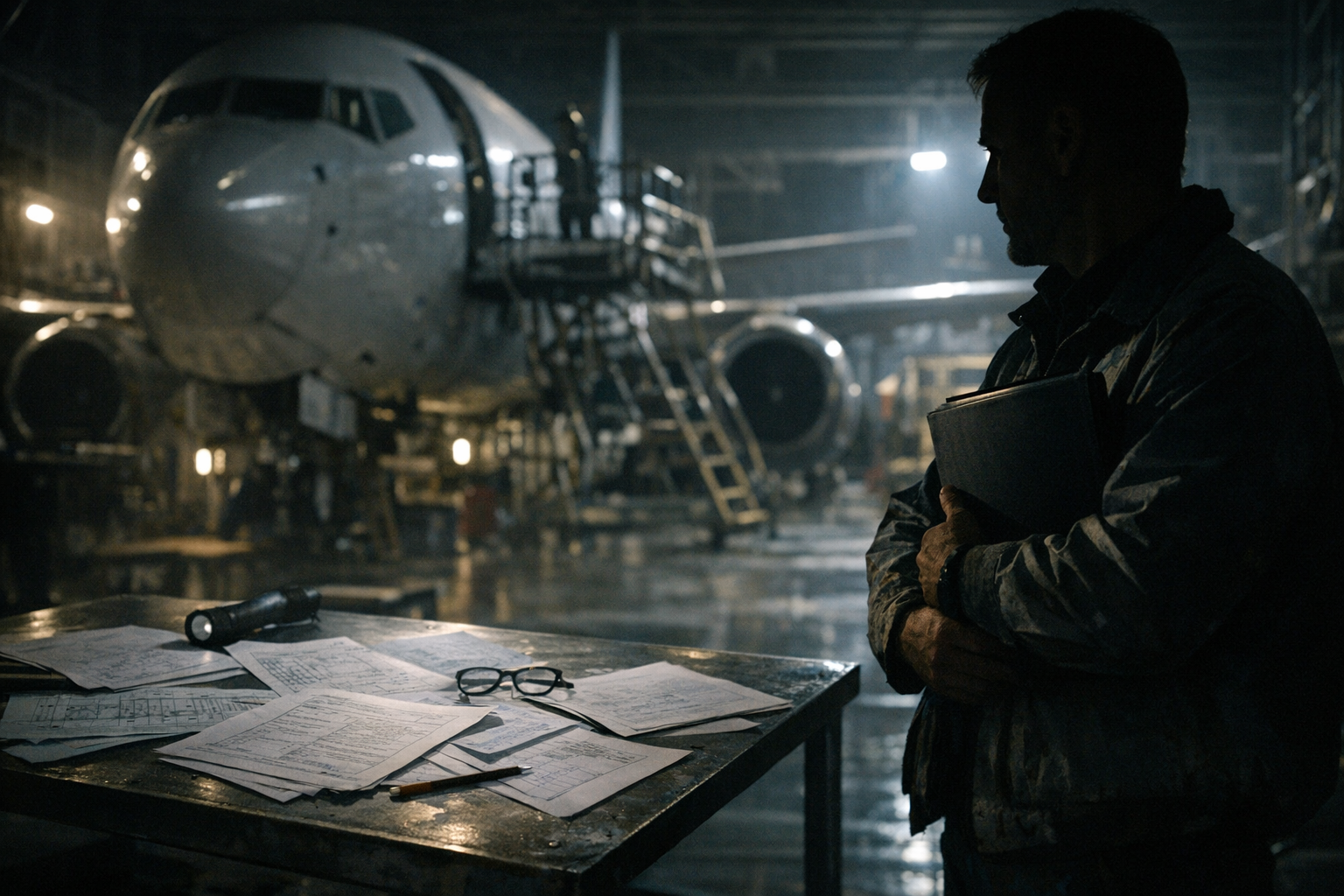
Some warnings are loud, public, and impossible to miss. Others sit inside locked systems, buried in reports, hallway conversations, and emails that rarely leave the building. That is what gives the Boeing whistleblower cases such force: they feel like glimpses into a sealed machine, where safety questions were raised from the inside and every delay afterward started to look like something people were not supposed to see.
What Happened
In recent years, Boeing has faced intense scrutiny over safety, production quality, and internal oversight. Public concern first surged around the 737 MAX disasters, which put the company’s engineering culture and decision-making under a harsh spotlight. But the wider conspiracy-style suspicion grew later, when whistleblower accounts began attracting headlines of their own.
Some former employees and contractors described pressure inside the system. They claimed production targets could outweigh caution, that defects were not always handled the way outsiders would expect, and that reporting concerns could carry personal risk. These accounts did not arrive in a vacuum. They landed in a public already primed to distrust large institutions, especially when those institutions deal with life-and-death systems.
🔎 Related Investigation:
Then came the human moments that made the story feel heavier. A worker speaks up after years around aircraft parts and quality checks. A hearing is scheduled. News coverage rises. Online, people begin connecting dots almost instantly: if someone warned about safety problems, and something later goes wrong, maybe the silence was not random at all. That leap is where a corporate accountability story starts turning into a cover-up theory.
One reason this topic gained so much traction is that Boeing is not a small company making a minor product. It sits inside a world of defense contracts, complex supply chains, regulators, investigators, and enormous economic pressure. When a company that large appears slow, defensive, or opaque, the public often assumes there must be more behind the curtain than the official explanation admits.
🔎 Related Investigation:
That does not mean every suspicion is baseless. It means this story lives in a dangerous middle zone: there are real documented reasons to ask hard questions, but there is also a strong temptation to treat every missing detail as proof of a hidden plot. That tension is what keeps the Boeing story alive.
Why People Believe It
People believe there may be a deeper conspiracy because the core ingredients are already there. First, aviation safety is technical and difficult for most people to evaluate directly. Second, Boeing’s recent history gave the public a reason to believe serious failures were possible. Third, whistleblowers carry moral weight. When a person from inside the system says something is wrong, it feels more credible than an outside rumor.
There is also a pattern people recognize from other cases. Institutions often deny, delay, soften language, or shift blame before the full picture becomes clear. That pattern can be seen in real scandals, including cases far beyond aviation. The legacy of stories like The Tuskegee Syphilis Study trained the public to take official reassurance less seriously when the stakes are high and the incentives to protect reputation are obvious.
🔎 Related Investigation:
Another reason belief grows fast is emotional logic. Most people board planes assuming somebody, somewhere, has checked every critical detail. When that trust is shaken, the reaction is not mild curiosity. It is fear. And fear looks for intention. If the system failed, then someone must have known. If someone knew, then maybe others helped keep it quiet. That chain of thought is simple, powerful, and often stronger than the available evidence.
Modern media adds fuel. A whistleblower interview, a hearing clip, a legal filing, and a tragic headline can circulate within hours. Online communities build timelines, compare statements, and frame uncertain events as a pattern before investigators finish basic fact gathering. Once that happens, the theory becomes self-reinforcing. Every unanswered question starts looking less like delay and more like concealment.
Claims vs Evidence
Claim: Boeing buried serious safety warnings and retaliated against people who tried to expose them. Evidence: There is public reporting and testimony showing real concerns about production quality, safety culture, and internal pressure. Government investigations, lawsuits, and prior company failures make these claims impossible to dismiss out of hand. It is fair to say the company has faced credible scrutiny.
Claim: Suspicious events around whistleblowers prove an organized conspiracy to silence insiders. Evidence: This is where the case gets much weaker. Public suspicion rose because several events felt alarming and emotionally loaded, but feeling suspicious is not the same as proving coordination. There is no confirmed public evidence showing a hidden operation directed at whistleblowers as a group.
Claim: Boeing’s size and defense connections mean damaging truths could easily be hidden. Evidence: Large institutions can absolutely hide mistakes for a time, especially when information is compartmentalized and legal risk is high. But possibility is not proof. The fact that a company has the ability to obscure details does not mean every disturbing event was engineered.
Claim: The pattern itself is the evidence. Evidence: Patterns can matter, but they can also be created by selective attention. When people already distrust an institution, they naturally gather every negative detail into a single narrative. Some of those details may belong together. Others may not. The real challenge is separating a documented culture problem from a broader conspiracy theory built on inference.
Reality Check
What we do know is serious enough on its own. Boeing has faced major public criticism over safety, oversight, and internal decision-making. Whistleblower concerns did not appear from nowhere. They emerged in an environment where trust had already been damaged, and where the consequences of failure were impossible to ignore.
What we do not know is just as important. There is no confirmed evidence in the public record proving that Boeing ran a coordinated conspiracy to eliminate, silence, or systematically suppress whistleblowers through some hidden command structure. That is the leap many people make, but the current evidence does not clearly support it.
The more grounded conclusion is uncomfortable because it is less dramatic. A company does not need a movie-style secret plot to create conspiracy-level suspicion. Bureaucracy, poor incentives, defensive legal behavior, fragmented accountability, and a damaged safety culture can produce a result that feels almost identical from the outside. To the public, it still looks like the truth is being buried.
That may be why this story resonates so deeply. It touches a modern fear that powerful systems do not have to be cleanly evil to become dangerous. They only have to be big enough, opaque enough, and slow enough to correct themselves while real people bear the risk. In that sense, the Boeing whistleblower story is less about one hidden mastermind and more about how distrust grows when institutions repeatedly fail to reassure with facts.
Conclusion
The Boeing whistleblower cases sit in the uneasy space between verified concern and expanding conspiracy. The warnings matter. The accountability questions are real. The public distrust did not come from imagination alone. But stronger claims about an organized suppression campaign still require stronger proof than has been publicly shown.
That leaves the case partially explained rather than fully resolved. People are not wrong to ask whether important warnings were overlooked or whether insiders paid a price for speaking up. They are wrong only when they treat every dark possibility as already proven. For now, the clearest answer is this: the story is powerful because real institutional failure created the conditions for conspiracy thinking to thrive.
🔎 If this story stayed with you, the author suggests these real cases next:
- Operation Northwoods: The Declassified Plan to Stage Terror and Blame Cuba
- The Tuskegee Syphilis Study: The Real Medical Cover-Up That Destroyed Trust
- Princess Diana Death Theories: Accident, Cover-Up, or a Conspiracy That Filled the Silence?
Explore more Cover-Ups stories here: