
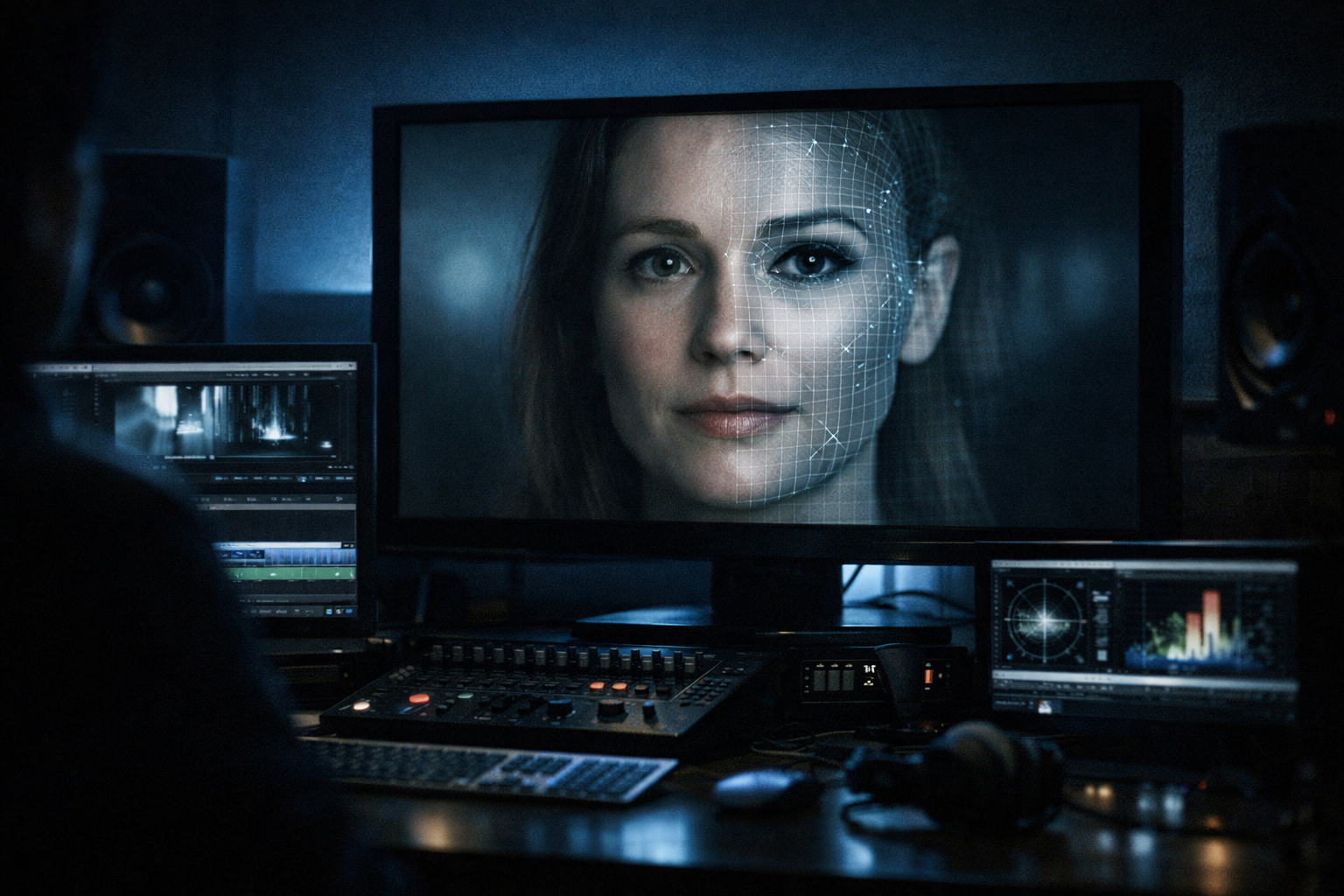
The clip looked too clean to be fake. A familiar face stared into the camera under hard studio light, made a shocking claim, and within minutes the video was everywhere. That is the trap of deepfake conspiracies: they arrive like stolen truth, carrying the feeling that something hidden has finally slipped past the gatekeepers.
You can picture the scene. Someone watches the clip alone at midnight, replaying a blink, a mouth movement, a half-second pause, wondering if they just saw forbidden evidence or a digital mask good enough to fool millions. That uncertainty is where today’s conspiracy culture gets its newest fuel.
What Happened
Deepfakes are synthetic videos, images, or audio files made with artificial intelligence. The technology studies real footage, learns how a person’s face or voice behaves, and then generates a convincing imitation. What once took expensive studios and expert effects teams can now be done with consumer tools, online services, and much lower skill.
The first wave of public attention focused on celebrity face swaps and obviously manipulated clips. They were strange, sometimes crude, and often easy to spot. But the technology improved fast. Better image models, stronger voice cloning, and easier editing software made the results much more believable.
That changed the emotional experience of seeing suspicious media online. In the past, a fake video often looked fake. Now a false clip can feel real on first viewing, especially on a small phone screen, compressed by social platforms, detached from its source, and shared with a dramatic caption already telling viewers what to believe.
Imagine a fast-moving news cycle. A tense election, a celebrity scandal, a war rumor, or a public health panic is already unfolding. Then a video appears that seems to show the missing piece. Even before experts check it, the clip can race through private chats, short-form feeds, and comment threads where people are rewarded for reacting first, not verifying first.
That is why deepfakes matter beyond technology. They do not just create fake media. They change the speed and mood of public belief. A believable fake can spread before fact-checkers catch up, while a real video can be dismissed as fake by people who do not want to accept it. In both directions, trust gets damaged.
The result is a new kind of information fog. Instead of asking only, "Is this claim true?" people start asking, "Can anything on screen be trusted at all?" That question is larger than any single clip, and it is exactly why deepfakes became a natural home for modern conspiracy thinking.
Why People Believe It
People believe deepfake theories because the core fear is grounded in reality. The technology is real. Fake audio exists. Synthetic video exists. Even public figures and major news organizations have warned about manipulated media. When the foundation is real, the bigger theory feels easier to accept.
There is also a visual bias at work. Humans are wired to trust what they can see and hear. A written rumor may create doubt, but a video feels like direct access. It feels like proof. That emotional shortcut is powerful, especially when the clip appears to confirm something a viewer already suspects.
Another reason is timing. Deepfakes thrive in moments when trust is already low. If people believe institutions lie, if platforms seem chaotic, and if public life feels staged, then synthetic media does not arrive as a strange new idea. It arrives as confirmation that the whole system is more fragile than anyone admitted.
That is the same pattern seen in other internet-born theories. In QAnon Theory Breakdown, vague drops and emotional narrative let people assemble a hidden story out of scattered digital clues. And in The Mandela Effect, shared confidence in false memory showed how easily groups can turn private certainty into collective belief.
Deepfakes add one more dangerous ingredient: apparent visual evidence. A person no longer needs to imagine what the secret truth might look like. They can watch a fabricated version of it in high definition, hear a cloned voice deliver it, and pass it on as if they are preserving a revelation others are too blind to see.
Claims vs Evidence
Claim: Deepfakes can now make any video impossible to trust.
What we know: Deepfakes can be highly convincing, but they do not make all video worthless. Authentic media can still be checked through source files, publication history, metadata, eyewitness reporting, forensic analysis, and cross-confirmation from multiple independent records. The problem is serious, but it is not total.
Claim: Viral deepfake clips are already controlling politics from behind the scenes.
What we know: There is concern from governments, researchers, and platforms that manipulated media could influence elections, public fear, and reputations. However, sweeping claims that deepfakes are secretly steering everything go beyond the confirmed evidence. In many cases, the bigger issue is not one master plot but a chaotic environment where false media can thrive.
Claim: If a suspicious video looks emotionally powerful, that is a sign it reveals hidden truth.
What we know: Emotional impact is not evidence. In fact, manipulated media is often designed to trigger shock, anger, or vindication because those emotions help people share before thinking. A clip that feels explosive may have been engineered precisely to bypass skepticism.
Claim: Deepfake technology is so advanced that detection is basically hopeless.
What we know: Detection is difficult and becoming harder, but not hopeless. Researchers, journalists, and forensic analysts can still identify inconsistencies in lighting, lip movement, compression patterns, source history, and distribution behavior. The real challenge is speed. False content can travel much faster than careful analysis.
Claim: Because deepfakes exist, any damaging real recording can be dismissed as fake.
What we know: This is one of the most realistic risks. Experts sometimes call it the liar’s dividend. Once the public knows synthetic media exists, people caught in genuine footage have a ready-made excuse. So the danger cuts both ways: fake media can impersonate reality, and real media can be denied by hiding behind the existence of fakes.
Reality Check
The strongest reality check is simple: deepfakes are a real technological problem, but most conspiracy claims about them grow larger than the documented facts. There is no confirmed evidence that fake video has made truth impossible. What it has done is raise the cost of verification and increase the number of moments where confusion can win.
That matters because confusion does not need to be perfect to be useful. A clip only has to seem plausible long enough to damage trust, stain a reputation, or push a rumor into millions of feeds. In that sense, deepfakes work best not as permanent proof but as temporary disruption.
They also fit neatly into a broader cultural weakness: people often judge evidence by whether it supports a story they already prefer. If someone wants to believe a public figure finally "slipped up on camera," a synthetic clip feels less like a warning sign and more like the missing key that unlocks everything.
But that same temptation can lead people in the wrong direction. Some videos are fake. Some are edited misleadingly. Some are real. The adult response is not to trust everything or reject everything. It is to slow down, trace the source, compare reporting, and separate technical possibility from confirmed proof.
So the reality check is not that deepfakes are harmless. They are not. The reality check is that the world has not become a total illusion. Evidence still exists. Verification still works. What changed is that suspicion now has better props, and those props are often convincing enough to drag ordinary people into extraordinary conclusions.
Conclusion
Deepfakes hit a nerve because they attack one of the oldest shortcuts in human thinking: seeing is believing. When a synthetic clip appears at the exact moment people are already afraid of censorship, corruption, or manipulation, it does not feel like a technical trick. It feels like forbidden access.
What we do know is serious enough on its own. Deepfake tools can create believable false media, spread confusion faster than verification, and give conspiracy culture a powerful new engine. But there is still no confirmed evidence that they have erased the difference between truth and fiction altogether.
The most honest conclusion is that deepfake conspiracies are partially explained. The technology is real. The threat is real. The leap from "real manipulation exists" to "nothing can be trusted anymore" is where the theory outruns the evidence.
🔍 If this story stayed with you, the author suggests these real cases next:
- The Mandela Effect: Why So Many People Remember the Same Wrong Detail
- QAnon Theory Breakdown: How an Internet Conspiracy Became a Real-World Movement
- Project Blue Beam: Could a Fake Alien Invasion Ever Be Staged?
Explore more Internet Conspiracies stories here: