
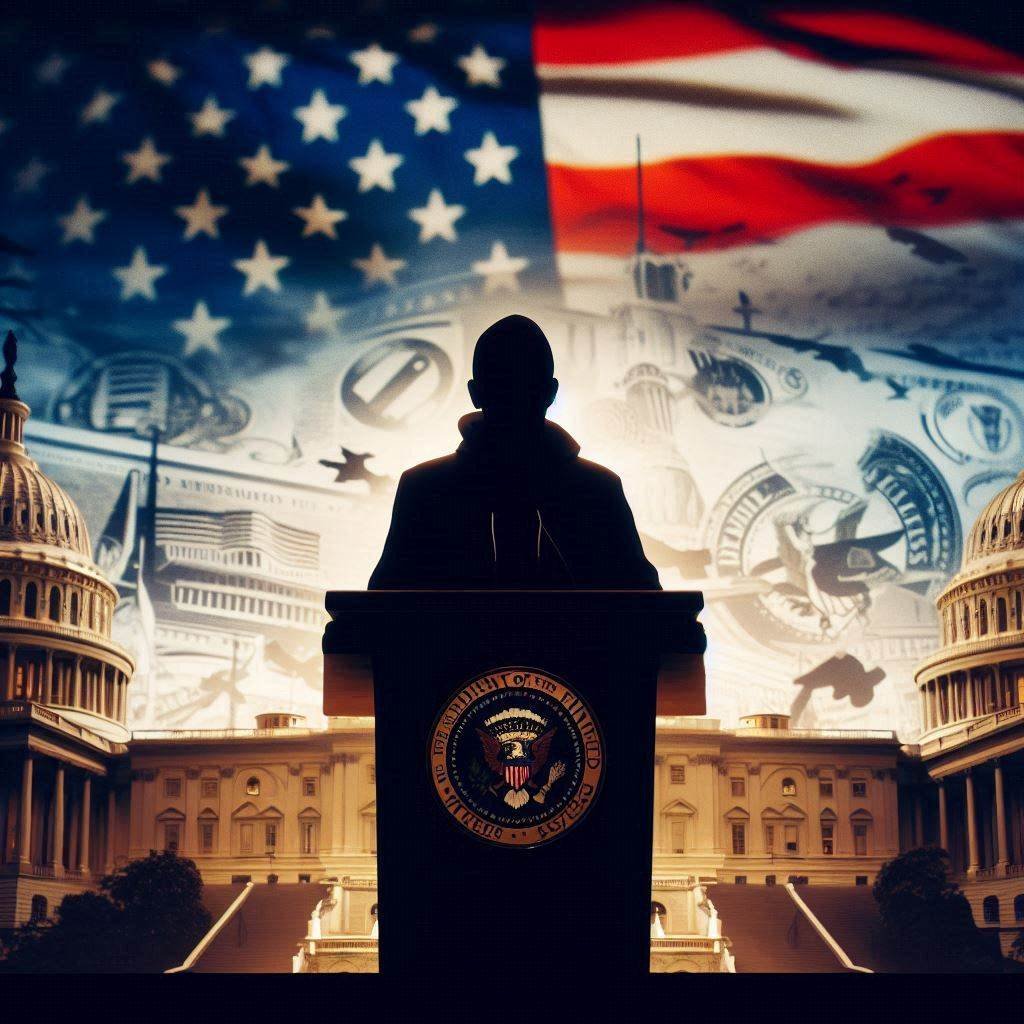
What if the people you see in power… aren’t the ones truly making the decisions? What if elections, speeches, and public debates are only the surface—while real control operates quietly, out of sight? This idea sits at the heart of one of the most enduring political theories: that a “shadow government” exists, pulling strings behind the scenes. But is there hidden control… or just a misunderstanding of how power actually works?
If you’ve explored theories about hidden influence like The New World Order or questioned elite coordination in posts like Bilderberg Group Meetings, you’ve already seen how easily power and secrecy can blur together. The shadow government theory takes that idea one step further—suggesting the real system isn’t just influenced… it’s controlled.
Shadow Governments: Hidden Power or Misunderstood Influence?
The Claim
The shadow government theory argues that official leaders—presidents, prime ministers, elected officials—are not the true decision-makers. Instead, real power is held by hidden groups operating behind the scenes. These groups are often described as elites, intelligence networks, financial powers, or secret organizations that shape global events without public accountability.
🔎 Related Investigation:
According to the theory, elections are limited in impact because the outcomes are guided, influenced, or controlled long before votes are cast. Policies, wars, economic shifts, and even major global events are believed to be planned or approved by this hidden layer of authority.
In some versions, the shadow government operates within existing institutions. In others, it exists entirely outside them—forming a parallel system that overrides official structures when necessary.
The idea is simple, but powerful: what you see is not what you get.
Why People Believe It
At first glance, the theory may sound extreme. But its appeal comes from something very real—how complicated and often confusing power structures actually are.
Governments are not just one person or one office. They are networks of agencies, advisors, committees, lobbyists, and long-term officials who remain in place even when elected leaders change. For many people, this complexity feels like secrecy.
And where there is secrecy, suspicion follows.
History has also played a major role in shaping this belief. Real events have shown that governments and intelligence agencies sometimes operate in ways the public does not immediately see. Programs can be classified. Decisions can be made behind closed doors. Information can be withheld.
That doesn’t prove the existence of a shadow government—but it does make the idea feel possible.
There’s also a deeper emotional layer. When people feel disconnected from decision-making or believe their voices don’t matter, the idea of hidden control can feel like an explanation. If things seem unfair, chaotic, or out of control, it’s easier to believe someone powerful is orchestrating it than to accept randomness or systemic complexity.
The Difference Between Influence and Control
This is where the conversation becomes more grounded.
There is a clear difference between influence and total control. And that difference is often where the shadow government theory stretches beyond evidence.
Influence is real. Wealthy individuals, corporations, and organizations can shape decisions through lobbying, funding, and access. Advisors and long-term officials can guide policies behind the scenes. Intelligence agencies can operate with limited public visibility.
But influence does not automatically equal absolute control.
A shadow government, as described in the theory, would require a level of coordination and secrecy across multiple countries, agencies, and generations that is extremely difficult to maintain. It would mean thousands of people working together, silently, without leaks or contradictions.
That scale introduces a major challenge: the more people involved, the harder it becomes to keep everything hidden.
Real-World Examples That Fuel the Theory
Part of what keeps this theory alive is that there are real examples of hidden or behind-the-scenes decision-making.
🔎 Related Investigation:
Intelligence operations, classified programs, and covert actions have existed throughout modern history. These are not theories—they are documented realities. But they are usually limited in scope, focused on specific goals, and eventually exposed or studied.
For example, certain government actions that were once secret later became public knowledge. That pattern reinforces the idea that more could still be hidden.
However, there is a difference between specific covert operations and a permanent, all-controlling shadow government. One is a tool used within a system. The other is a complete replacement of that system.
That distinction is often blurred in conspiracy discussions.
The Role of Elites and Private Influence
Another piece of the puzzle is the role of elites—wealthy individuals, global organizations, and influential networks.
Meetings like those discussed in Bilderberg Group Meetings often become focal points for suspicion because they involve powerful people gathering privately. To some, these meetings represent coordination at the highest level.
But private meetings are not the same as secret control over governments.
Leaders, business figures, and experts regularly meet to discuss global issues. While these discussions can influence thinking and policy, they are not necessarily evidence of a unified hidden authority directing world events.
The idea becomes compelling when these gatherings are viewed not as discussions—but as decisions. That shift from influence to control is where belief strengthens.
The Internet and the Growth of the Theory
The internet has played a major role in expanding the shadow government narrative.
Information spreads faster than ever. Clips of speeches, leaked documents, and fragments of data can be shared without full context. When these pieces are combined, they can create a story that feels complete—even if it is built on assumptions.
Online communities also reinforce beliefs. Once someone begins exploring the idea of hidden control, they often encounter more content that supports it. Over time, the theory can feel less like a possibility and more like a confirmed reality.
This pattern is not unique to this theory—it appears in many others, including QAnon Theory Breakdown, where online narratives grew into real-world belief systems.
The Challenge of Proving It
One of the most difficult aspects of the shadow government theory is that it is almost impossible to fully prove—or fully disprove.
Supporters argue that the lack of evidence is itself proof of secrecy. Critics argue that without evidence, the theory cannot be confirmed.
This creates a loop.
If no evidence is found, it means the system is well hidden.
If evidence appears, it is seen as confirmation.
If evidence contradicts the theory, it may be dismissed as part of the cover-up.
This structure makes the theory resilient, but also difficult to test using traditional logic.
Reality Check
So… is there a shadow government secretly controlling everything?
There is no credible evidence supporting the existence of a unified, hidden authority that fully controls global or national governments from behind the scenes.
What does exist is a complex system of influence—political, economic, and institutional. Power is often concentrated, sometimes opaque, and not always evenly distributed. Decisions are not always transparent, and trust in institutions has been challenged many times.
But complexity is not the same as conspiracy.
The shadow government theory takes real concerns—lack of transparency, influence of elites, hidden operations—and connects them into a single, all-encompassing explanation. That explanation is simple and emotionally satisfying, but it overlooks how fragmented and competitive real-world power structures actually are.
In reality, power is not held by one invisible group. It is spread across many competing interests, institutions, and individuals. That doesn’t make the system perfect—but it makes it far less controlled than the theory suggests.
Understanding that difference is key. Because when everything is attributed to hidden control, it becomes harder to see the real forces at play—and harder to question them effectively.
Sometimes the truth is not that power is hidden. It’s that power is complicated.
🔎 If this made you question who really holds power, explore these next:
- The New World Order: Who Really Controls the World?
- Bilderberg Group Meetings: Secret Summit or Global Discussion?
- QAnon Theory Breakdown: From Online Posts to Real-World Impact
📂 Explore more in this category:
Political Conspiracies