
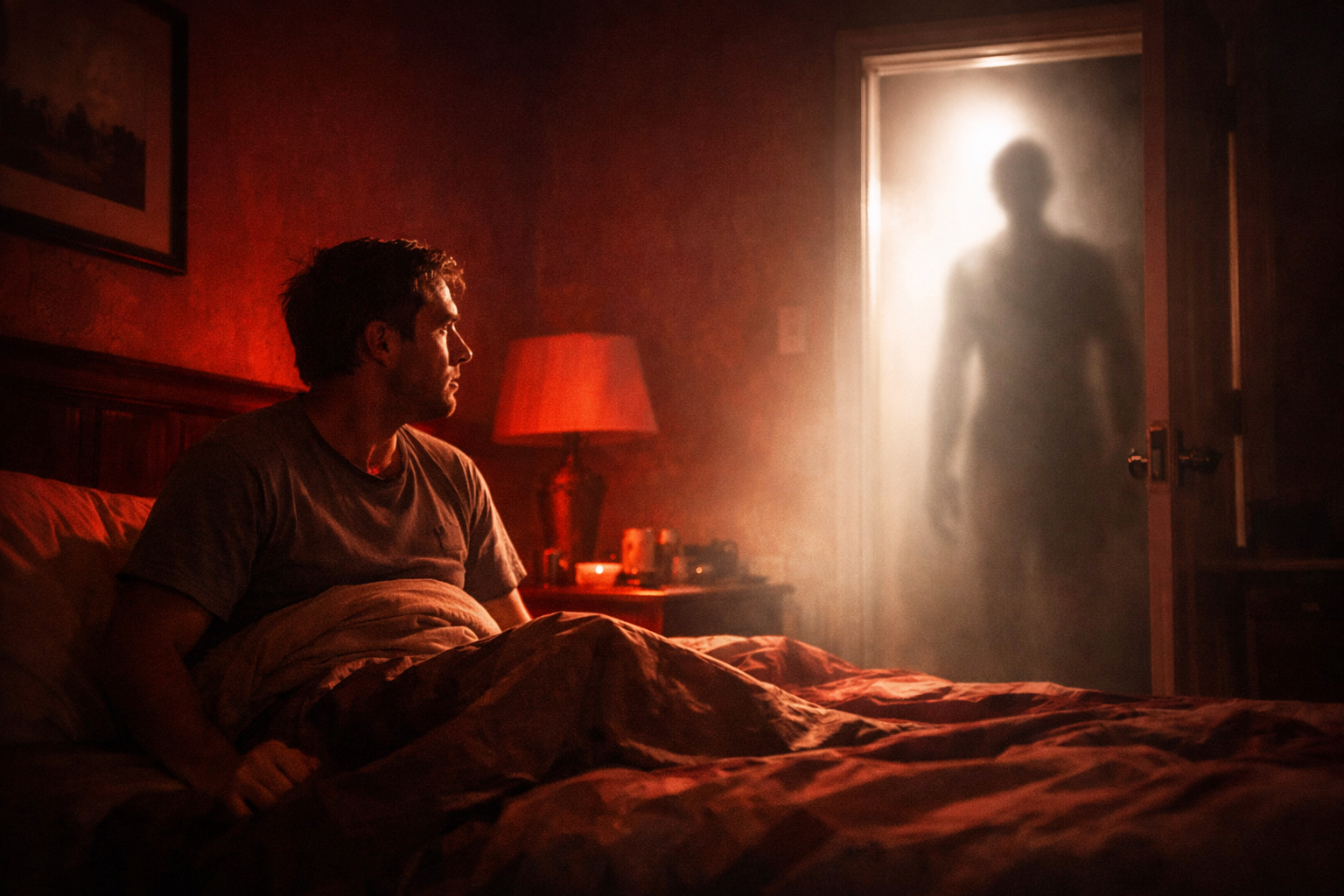
Behind a locked door, under red night lights and the hush of machines, the question changes shape. It is no longer just whether something is out there. It becomes whether alien agenda theory is the hidden script behind the strangest stories people swear they lived through. That leap—from presence to purpose—is where this theory becomes unsettling.
What Happened
The alien agenda theory did not begin as one clean claim. It grew out of decades of UFO stories, abduction reports, government secrecy, and pop-culture warnings. Once people moved past the question of whether unidentified craft or nonhuman beings might exist, a darker question followed: if they are real, what do they want?
That question gave conspiracy culture a new kind of fuel. Sightings could be brushed off as lights in the sky. But stories about intention felt more personal. Witnesses described being watched, taken, examined, warned, or returned with missing time and a sense that something had happened just beyond full memory. In living rooms, in late-night radio calls, and in paperback accounts traded like contraband, the same mood kept returning: contact was not random. It was part of a plan.
One mini-scene appears again and again in this lore. A person wakes in the dark, frozen by fear, convinced the room is occupied. There is a shape near the bed, a pressure in the air, maybe a bright rectangle of light at the window, and then a jump in time they cannot explain. By morning, they are left with fragments—a nosebleed, a nightmare-like image, a certainty that the event meant more than an ordinary bad dream. That human moment is one reason the theory lasts. It is intimate, not abstract.
As the lore spread, the supposed agendas multiplied. Some versions claimed aliens were conducting a breeding or hybrid program. Others said they were preparing humanity for open contact, quietly steering human history, harvesting biological material, or studying us the way humans study animals. A more spiritual version framed the agenda as a warning mission: witnesses said the beings seemed concerned about nuclear weapons, environmental collapse, or human violence. In this version, the visitors were not invaders so much as cold observers, or stern messengers.
The idea also overlapped with older UFO narratives already familiar to readers of NASA Alien Contact Cover-Up. If governments were hiding contact, many believers reasoned, then they must know something about motive too. Secrecy made the theory feel stronger. Missing records, classified programs, and vague official language allowed believers to imagine a second layer of knowledge just out of reach.
Why People Believe It
People believe in hidden motives because motive makes a mystery feel complete. A light in the sky is strange, but a hidden mission explains why the light was there in the first place. Human beings are pattern-seeking creatures. We do not just want events. We want intention.
Alien agenda theory also survives because UFO culture contains a lot of repeated storytelling elements. Independent witnesses often describe similar beings, medical-style examinations, telepathic communication, missing time, or warnings about humanity’s future. To believers, these repeated details look like a pattern. If the same themes appear in different places and decades, they argue, then maybe those stories point to a real program rather than random invention.
There is also an emotional reason. The theory translates modern anxiety into a single hidden actor. Fear about surveillance, loss of control, environmental collapse, reproduction, or manipulation can all be folded into one story about outside intelligence studying or guiding humanity. That makes the theory powerful. It turns scattered social fears into a plot.
Stories of abduction and contact also feel convincing because many witnesses do not sound like performers. They sound frightened, embarrassed, and unsure of what happened to them. That matters. Readers do not always believe because the evidence is strong. Sometimes they believe because the person telling the story seems sincere. Articles like Alien Abduction Stories show how this category gains force from emotional consistency even when hard proof remains elusive.
And then there is secrecy itself. When governments investigate UFOs, keep records classified, or release confusing statements, it invites a familiar leap: if officials know more than they say, then maybe the hidden information is not just about craft, but about purpose. That is where ordinary uncertainty becomes a conspiracy theory of motive.
Claims vs Evidence
The claims behind alien agenda theory are wide-ranging but usually fall into a few clear groups. One claim says aliens are studying human biology through repeated abduction events and reproductive experiments. Another says they are guiding world events quietly, shaping technology, culture, or political decisions without open contact. A third says they are sending warnings about nuclear war, climate collapse, or the survival of the species. The darkest versions say humans are being managed, harvested, or prepared for some future stage we have not been told about.
The evidence is much weaker than the claims. Most of it is anecdotal: witness testimony, hypnotic recall, recurring story patterns, and interpretation of unexplained experiences. Some believers point to similarities between accounts as if consistency alone proves an external source. But similar stories can also spread through books, documentaries, radio shows, online forums, and cultural repetition. Once a narrative takes hold, later accounts may be shaped by what people already expect contact to look like.
Medical or physical proof is also thin. Most cases do not produce verifiable biological evidence, confirmed nonhuman materials, or independently documented events that establish a coordinated agenda. Even when a witness reports missing time, marks on the body, or intense memory fragments, those details do not automatically prove alien intention. They prove that the person had an experience they found real and disturbing. That is not the same as proving what caused it.
Government secrecy does not close the gap either. Real classified programs can support suspicion, but they do not confirm an alien mission. Secrecy can hide mundane things just as easily as dramatic ones. In UFO culture, believers often treat withheld information as indirect proof of the biggest theory available. Logically, that is too large a jump.
Reality Check
The strongest reality check is that alien agenda theory asks people to move from uncertain events to highly specific conclusions about motive. That is an enormous leap. Even if one granted, for the sake of argument, that some UFO encounters are genuinely unexplained, it still would not follow that a coherent alien program has been established. Unknown does not mean intentional. And intentional does not mean we know the intention.
There are also ordinary explanations for many of the experiences tied to the theory. Sleep paralysis can create the terrifying sense of presence in a room, combined with vivid imagery and temporary inability to move. False memory, dream-state confusion, suggestion during hypnosis, and stress-related perception problems can all turn a frightening moment into a structured narrative over time. None of those explanations are as dramatic as a secret alien mission, but they fit many cases surprisingly well.
Culture matters too. Once books, films, documentaries, and online communities repeated the same contact themes, they created a ready-made template. A person trying to interpret a bizarre personal event does not start from zero. They start from a library of existing images: the exam table, the bright room, the warning message, the hybrid child, the hidden observers. That makes the testimony meaningful as human experience, but less reliable as proof of a literal agenda.
The theory also carries a contradiction. It treats aliens as powerful enough to reach Earth, avoid full exposure, manipulate memory, and maintain a long-term operation—yet somehow unable to complete their plan in a visible, decisive way. To believers, that ongoing ambiguity proves subtlety. To skeptics, it looks more like a theory that stays alive because it can absorb any outcome. No disclosure? That proves concealment. No hard evidence? That proves sophistication. Contradictions are not fatal in conspiracy culture when the hidden actor can explain every missing piece.
The most grounded conclusion is simpler. Alien agenda theory is best understood as a story people build when unexplained experiences, institutional secrecy, and deep modern fears meet in the same place. It is psychologically compelling. It is culturally durable. But the case for a verified nonhuman mission on Earth remains extremely weak.
Conclusion
Alien agenda theory persists because it answers the question that comes after the first mystery. Not just what was that? but why was it here? That second question is harder, darker, and more personal. It pulls UFO belief away from distant lights and into the territory of intention, control, and hidden plans.
There is a reason that idea keeps returning. It gives shape to fear. It turns fragmented witness stories into a larger narrative. It explains secrecy with more secrecy. But when claims are separated from facts, the theory rests mostly on patterns in testimony, repeated lore, and interpretation layered over uncertainty. That is enough to keep the story alive. It is not enough to prove a hidden mission.
For now, the most honest answer is that people have reported strange and sometimes frightening experiences for decades, but the evidence does not establish a confirmed alien agenda behind them. The mystery remains. The mission does not.
🔎 If this story stayed with you, the author suggests these real cases next:
- Alien Hybrid Theory: Secret Program or Fear of Human Manipulation?
- Interdimensional Beings Theory: Alien Contact or a New Shape for an Old Mystery?
- Area 51 Alien Rumors: Why a Real Secret Base Became the Center of UFO Lore
Explore more Alien & UFO Theories stories here: