
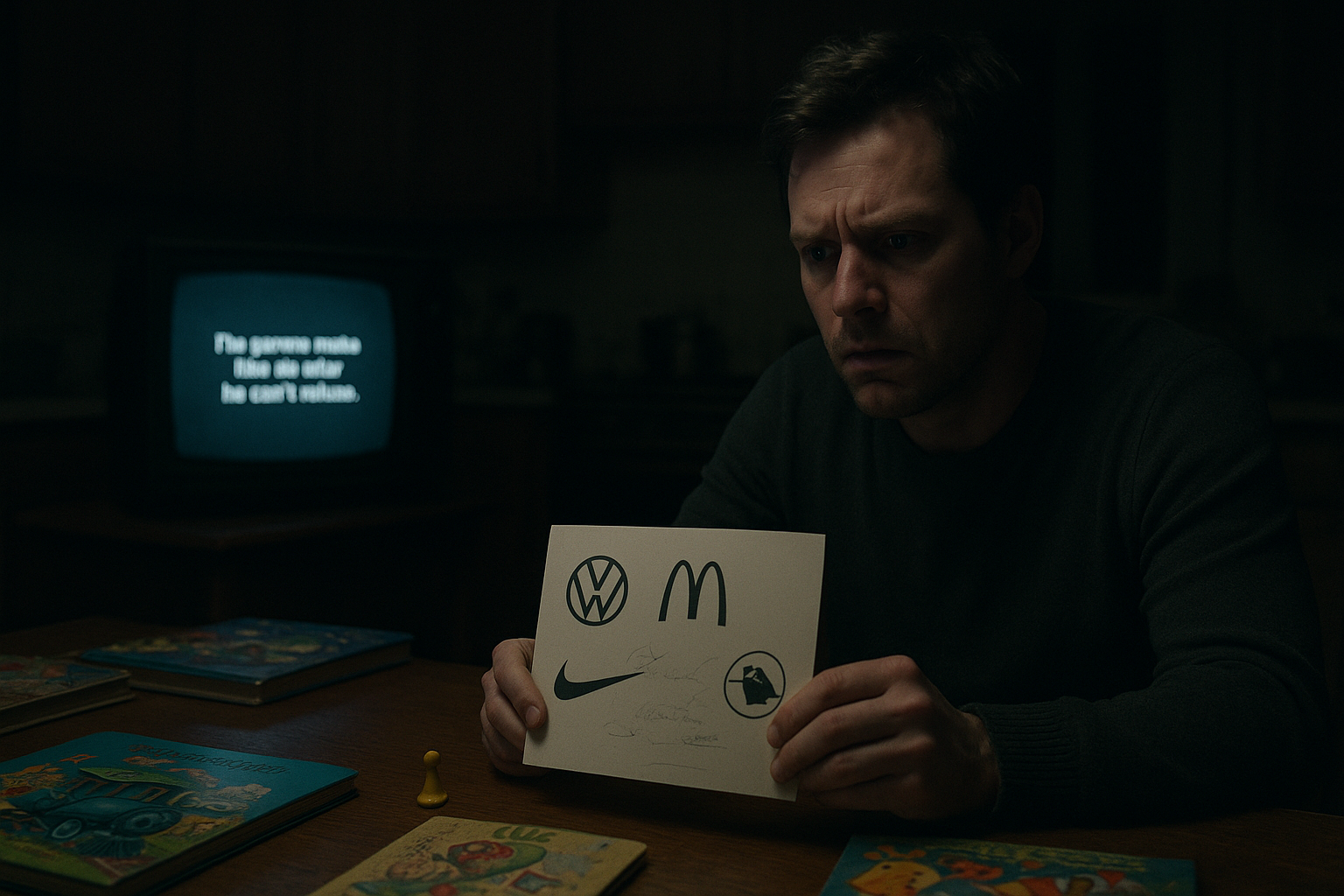
The clip looked ordinary until thousands of people swore the same impossible thing at the same time. A children’s book title, a movie quote, a brand logo sitting in plain sight on screens and cereal boxes suddenly felt like a locked room with the furniture moved in the dark. That is where the Mandela Effect lives: inside familiar details people think they remember with total confidence, even when the record says otherwise.
What Happened
The Mandela Effect is the name given to a strange pattern of shared false memory. Large groups of people remember the same detail the wrong way, then react with real shock when they discover that photos, videos, packaging, and official records do not match what they expected.
The phrase became popular after many people claimed they clearly remembered Nelson Mandela dying in prison during the 1980s. In reality, Mandela was released in 1990 and died in 2013. That mismatch gave the phenomenon its name, but the idea spread because the examples felt personal. People were not arguing about some obscure date hidden in a textbook. They were arguing about things they thought they had seen dozens of times.
🔎 Related Investigation:
- Internet Conspiracies: The Communities, the Hoaxes, and the Patterns That Turn Rumors Into Movements
Common examples show why the theory spread so fast online. Some people insist the children’s series was called Berenstein Bears, not Berenstain Bears. Others remember the Monopoly mascot wearing a monocle, even though he does not. Many are certain Darth Vader said, “Luke, I am your father,” when the line in The Empire Strikes Back is actually, “No, I am your father.”
Then there is the human moment that keeps the story alive. Someone is sitting at a kitchen table late at night, half laughing, half unsettled, scrolling through old logos and movie clips while a friend says, “No way, that can’t be right.” It feels tiny, almost silly, until the certainty kicks in. That detail was part of your mental wallpaper, and now the wallpaper has changed.
Because the examples are simple and shareable, the Mandela Effect became perfect internet fuel. Forums, TikTok compilations, YouTube explainers, and Reddit threads turned isolated confusion into a collective event. The more examples people traded, the more the phenomenon started to feel less like normal forgetfulness and more like evidence that something deeper had gone wrong.
That is when the theory split in two directions. One direction stayed grounded and asked what memory science could explain. The other moved into bigger claims about parallel timelines, altered reality, secret manipulation, and hidden experiments on human perception.
The site has seen that jump before in stories like QAnon Theory Breakdown: How an Internet Conspiracy Became a Real-World Movement, where shared belief gave ordinary posts the weight of revelation. The Mandela Effect is different in tone, but the emotional engine is familiar: people trust the feeling of recognition more than the boring record in front of them.
Why People Believe It
People believe Mandela Effect examples because memory does not feel like guessing. It feels like replay. When someone recalls a brand logo or famous line, they usually do not experience it as a fragile reconstruction. They experience it as something solid and already known.
🔎 Related Investigation:
- Internet Conspiracies: The Communities, the Hoaxes, and the Patterns That Turn Rumors Into Movements
That confidence matters. If one person misremembers a detail, it is easy to shrug it off. If thousands of people misremember the same detail, it starts to feel less like a mistake and more like a clue. Shared error looks suspicious, especially when the detail seems basic.
There is also the internet factor. Once a person sees a viral example, they often do not test their memory in isolation. They test it after being primed by comments, jokes, and side-by-side images. That social setup can reinforce certainty. Instead of asking, “What do I really remember?” people start asking, “Wait, was everyone else seeing what I saw too?”
Another reason the theory sticks is that some false memories are not random. They follow patterns that feel natural. “Berenstein” sounds more familiar to many English speakers than “Berenstain.” A monocle fits the image of a rich board-game mascot. “Luke, I am your father” makes more sense outside the movie because it tells listeners who the speaker is talking to. The altered version can feel more right than the original.
Supporters of paranormal explanations also point to the emotional force of these moments. They argue that if so many minds land on the same wrong answer, maybe the answer was once right. That is where theories about timeline shifts and reality changes enter the picture. The claim is not just that memory failed. The claim is that reality itself may have changed while traces of the old version remained in people’s minds.
The appeal is obvious. A memory error is ordinary. A crack in reality is unforgettable. Internet culture rewards the second story every time.
That same attraction to hidden design shows up in theories like Project Blue Beam: Could a Fake Alien Invasion Ever Be Staged?. When a mystery leaves a gap, people often rush to fill it with a system, a plan, or an unseen hand. The Mandela Effect turns that instinct inward, toward memory itself.
Claims vs Evidence
Claim: The Mandela Effect proves that large numbers of people remember the same alternate past.
Evidence: It is true that large groups of people often report the same wrong memory. That part is observable. Online examples, surveys, and repeated viral cases show that shared false memory is real as a phenomenon. But shared memory error is not the same thing as proof that an alternate version of history once existed.
Claim: Parallel universes or timeline shifts explain why the same details are remembered incorrectly.
Evidence: There is no confirmed scientific evidence that Mandela Effect examples come from timeline merging, dimensional overlap, or reality edits. These ideas are imaginative, and they fit the emotional experience, but they remain speculation. What we do have strong evidence for is that human memory is reconstructive, not perfect playback.
Claim: If many people remember the same wrong quote, logo, or spelling, a natural explanation is impossible.
Evidence: Natural explanations are not only possible; they are often strong. People absorb details through repetition, approximation, and context. Similar sounds, familiar spelling patterns, and cleaner phrasing can all shape memory. A misquote that is easier to repeat can spread faster than the original line, then feel more authentic because it is the version people hear most.
Claim: The Mandela Effect shows that records may have been secretly changed after the fact.
Evidence: There is no verified evidence of a coordinated effort to alter books, packaging, films, and archived materials in order to create these examples. To support that claim, there would need to be reliable proof of broad tampering across many independent sources. That evidence has not appeared.
Claim: The strongest explanation is that memory itself is unreliable in predictable ways.
Evidence: This is the explanation most consistent with cognitive psychology. Memory is shaped by suggestion, expectation, repetition, language patterns, and social reinforcement. People do not store every detail exactly. They rebuild details from fragments, and the rebuild can be surprisingly convincing.
Reality Check
The Mandela Effect is real in one important sense: people genuinely experience shock when a trusted memory fails. That emotional jolt is not fake. It can feel eerie because it briefly damages a basic assumption that most people carry through life, which is that familiar details should stay familiar.
But the strongest evidence points toward memory science, not broken reality. Human memory is efficient, not exact. It keeps meaning better than detail. It stores patterns better than perfect wording. It borrows from expectation, fills gaps without permission, and becomes more confident when other people repeat the same version.
That explains why these examples cluster around logos, names, movie quotes, and cultural references. They are the kinds of things people think they know without checking. They also pass through millions of retellings, jokes, parodies, and quick glances. Over time, the cleaner version can replace the correct one inside memory.
There is also a hard lesson here about the internet. Once a false memory becomes a meme, it gains social proof. People do not just remember. They remember together. That does not make the memory true, but it does make it feel stronger.
So where does this one land? The most honest answer is mostly debunked, with the human experience fully explained only in part. The paranormal claims behind the Mandela Effect do not have strong evidence. The psychological explanation is much stronger. Still, the reason the phenomenon fascinates people is not hard to understand. It turns a normal flaw in the mind into a moment that feels deeply personal and strangely cosmic.
In other words, the mystery is not that reality changed. The mystery is how easily confidence can outrun accuracy, especially when millions of people are making the same mistake together.
Conclusion
The Mandela Effect stays alive because it attacks something people rarely question: the trust they place in their own memory. A wrong date or misheard quote should be small. But when the mistake is shared, repeated, and emotionally familiar, it starts to feel like a door into something hidden.
What we actually know is more grounded and, in its own way, more interesting. People are not cameras. Memory is not a vault. It is a living system that edits, simplifies, and rebuilds. That makes the Mandela Effect less like proof of another universe and more like proof that the human mind can turn ordinary error into a full-blown mystery.
🔎 If this story stayed with you, the author suggests these real cases next:
- Why the Mandela Effect Feels Like a Secret History in Plain Sight
- How QAnon Turned Anonymous Posts Into a Hidden-War Narrative
- Could Project Blue Beam Turn Fear Into a Manufactured Reality?
Explore more Internet Conspiracies stories here: