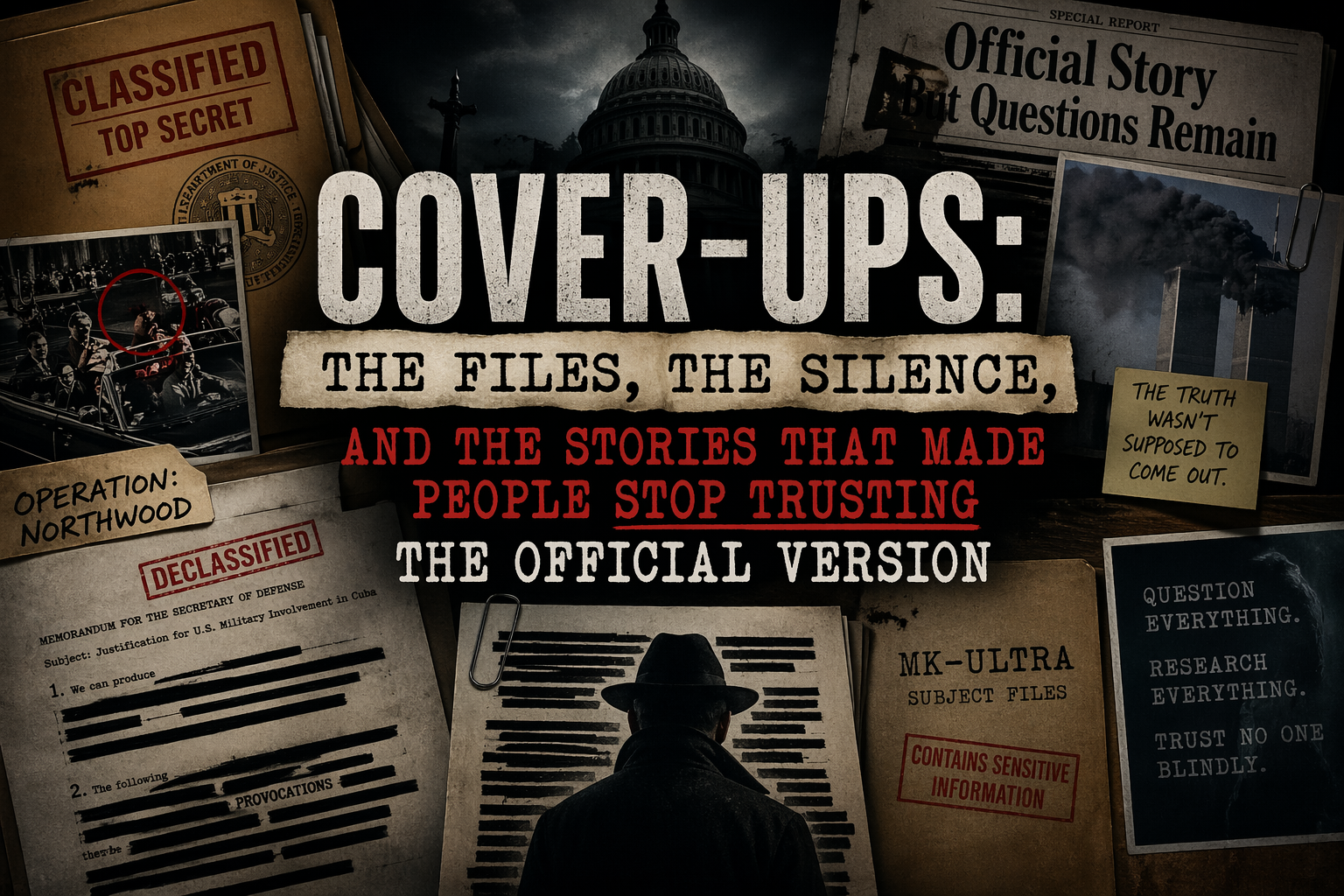
Cover-Ups: The Files, the Silence, and the Stories That Made People Stop Trusting the Official Version

A cover-up does not need to be fully proven to change a country’s trust forever. Sometimes the thing that breaks belief is not a confession, a leaked tape, or a final smoking gun. Sometimes it is the silence. A file stays sealed too long. A family gets half-answers. A whistleblower speaks and then disappears into a wall of lawyers, denials, or redacted pages. That is the point where the official version may still stand on paper, but it no longer feels complete in the public mind.

Continue ReadingCover-Ups: The Files, the Silence, and the Stories That Made People Stop Trusting the Official Version

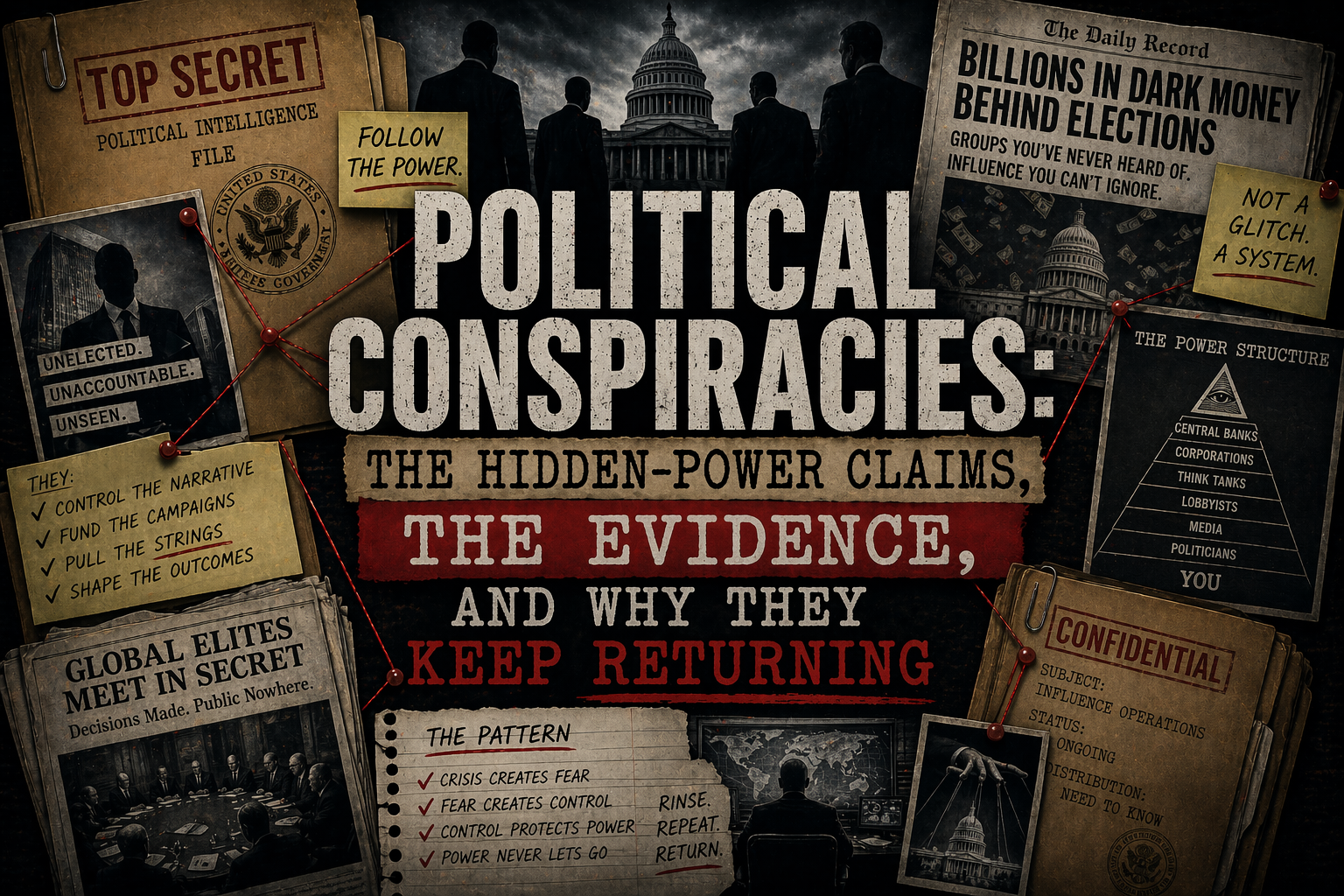
Political Conspiracies: The Hidden-Power Claims, the Evidence, and Why They Keep Returning

Political conspiracy theories thrive where real secrecy, institutional distrust, and partial evidence collide. This category guide follows the strongest hidden-power claims, shows where they connect to documented history, and separates structural suspicion from the bigger stories the evidence cannot fully prove.

Continue ReadingPolitical Conspiracies: The Hidden-Power Claims, the Evidence, and Why They Keep Returning

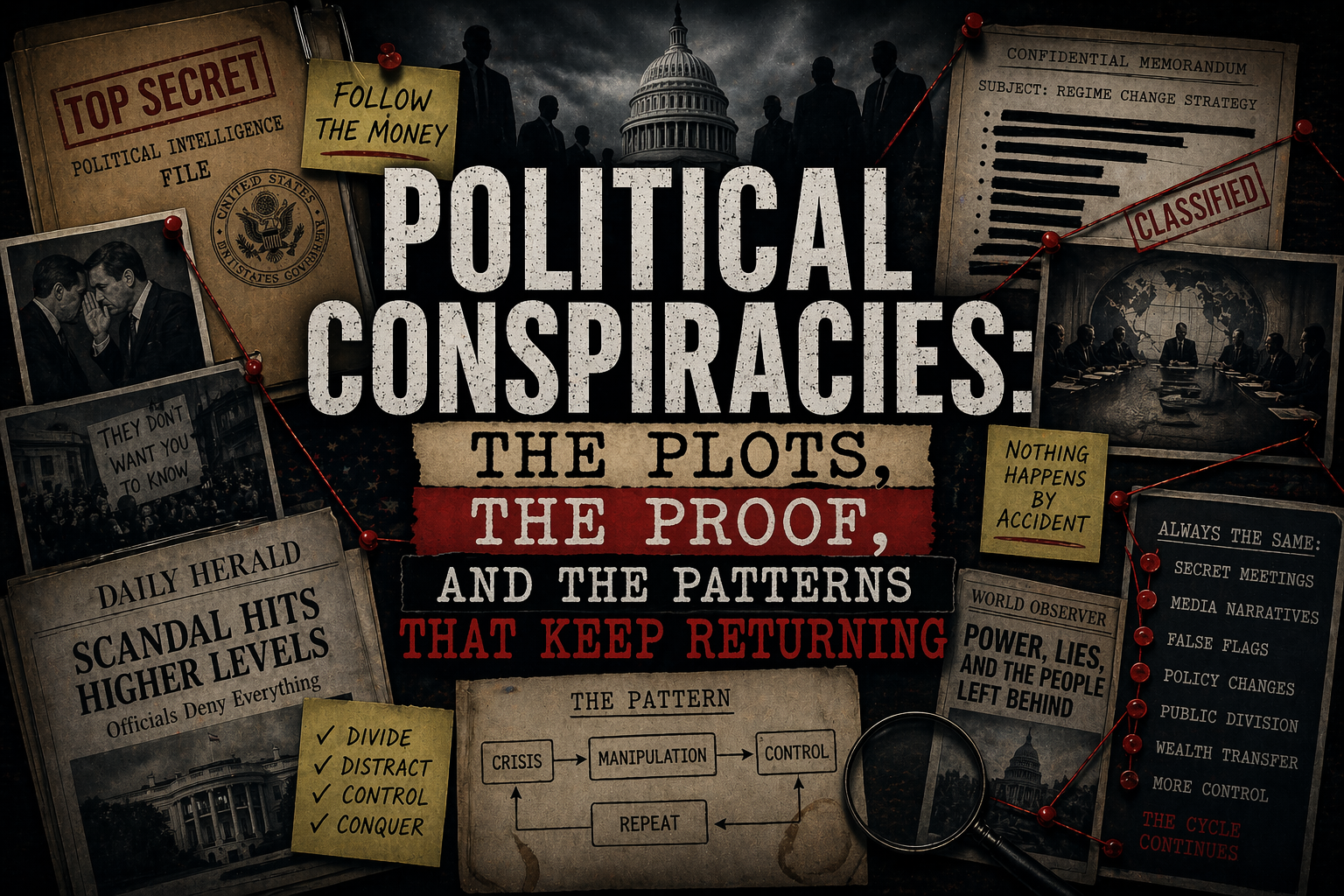
Political Conspiracies: The Plots, the Proof, and the Patterns That Keep Returning

A leaked memo, a closed-door hearing, a declassified surveillance program—each one looks, for a moment, like proof that hidden power is finally stepping into view. That is the engine behind political conspiracy culture. A real secret surfaces, a genuine abuse of power is documented, and the public learns one more time that institutions can mislead, conceal, or manipulate. But the same moment that justifies skepticism also makes exaggeration easier. Soon every contradiction looks coordinated, every bureaucratic gap feels sinister, and every fragment of evidence is pushed toward a grand design.

Continue ReadingPolitical Conspiracies: The Plots, the Proof, and the Patterns That Keep Returning